

A Comprehensive History of Argentine Tango
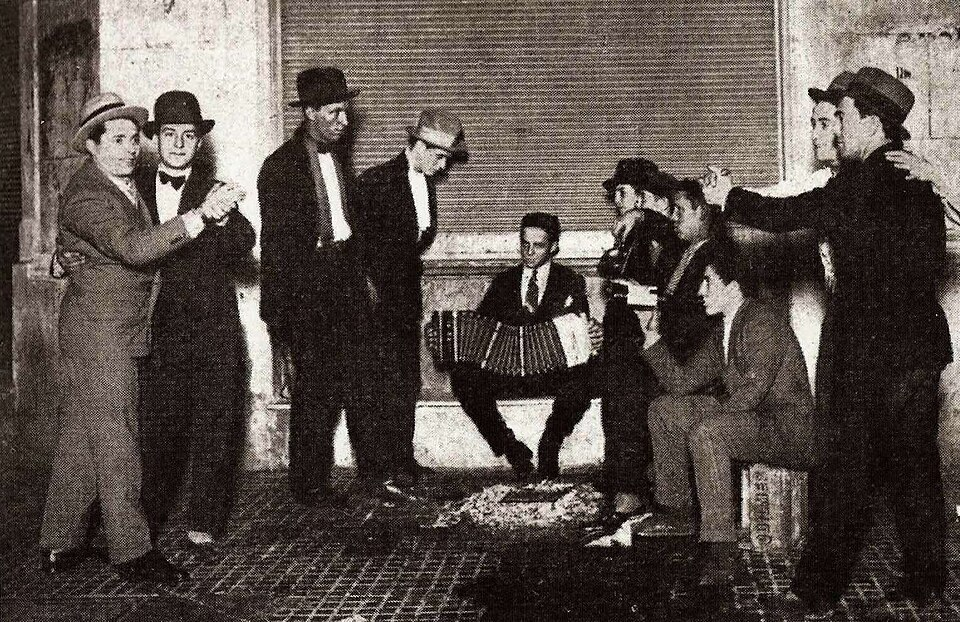
Argentine tango is best understood not as a single invention but as a Río de la Plata urban complex of music, dance, poetry, and social practice that took shape between the late nineteenth and early twentieth centuries in Buenos Aires and Montevideo, especially in working-class and port districts transformed by mass immigration, Afro-descendant cultural continuities, and rapid urbanization. Official Argentine, Uruguayan, and UNESCO accounts all frame tango as a joint River Plate heritage rather than an exclusively national one, even though later state narratives often nationalized it differently on each shore.
Its early social environments were heterogeneous: suburban dance halls, academias, cafés, cabarets, patios, and probably brothel-adjacent spaces all mattered, but reducing tango to a “brothel origin” alone oversimplifies the evidence. Recent scholarly summaries note both the strength of that origin myth and the legal-geographic fact that downtown Buenos Aires restricted brothels, alcohol, and dancing, pushing much early activity to the urban margins. The best-supported conclusion is that tango emerged from marginal yet highly connected circuits linking poor neighborhoods, transport corridors, immigrant sociability, and commercial entertainment.
Musically, tango moved from early flexible ensembles and local dance repertories into the more standardized orquesta típica and then through major stylistic phases: guardia vieja, guardia nueva, tango canción, the Golden Age dance-orchestra era, nuevo tango, and later electronic or neo-tango. By the 1920s, the canonical sextet of two violins, two bandoneons, piano, and double bass had become foundational; key musical features included the shift from early habanera-derived patterns toward marcato, síncopa, and later 3-3-2, as well as the contrast between cantando and rítmico phrasing, the use of arrastre, and a repertory of idiomatic instrumental effects called yeites.
The music’s major turning points are inseparable from emblematic figures. Carlos Gardel consolidated tango canción and the modern tango singer’s persona; Julio de Caro became the symbol of guardia nueva modernization; Aníbal Troilo, Juan D’Arienzo, Carlos Di Sarli, Osvaldo Pugliese, and Horacio Salgán defined competing Golden Age and post-Golden Age orchestral ideals; and Astor Piazzolla reconfigured tango’s harmonic language, instrumentation, form, and international status through nuevo tango. Official institutions in Argentina today still describe Piazzolla’s work as a transformation of traditional tango through classical, jazz, and experimental materials, while simultaneously acknowledging the resistance he initially faced from traditionalists.
In dance, the core constant has been improvised partner movement in embrace, but the social and theatrical meanings of that movement have changed repeatedly. Modern institutions distinguish social improvisational forms such as tango de pista/salón from tango escenario, while contemporary teaching and scholarship also recognize milonga, vals, milonguero/apilado, Villa Urquiza/salón, and nuevo tendencies. Since the late twentieth century, pedagogy has been heavily shaped by stage icons such as Juan Carlos Copes and María Nieves, by systematic teachers such as Gloria and Rodolfo Dinzel, and by analytic innovators associated with tango nuevo. At the same time, newer scenes have challenged fixed gender roles, especially through queer tango, role-switching pedagogies, and the rise of women leaders.
Politically, tango has passed from marginality to national emblem, from mass popular entertainment to periods of decline, and then to staged and global revival. Official Argentine cultural history explicitly links its Golden Age expansion to supportive national cultural policy in the mid-1940s and its later decline to Argentina’s darkest decades, while the case of Osvaldo Pugliese shows how censorship and repression could fall directly on tango artists. Revival arrived in waves: the democratic reopening of the 1980s, the international impact of Tango Argentino on Broadway in 1985, the social-dance revival of 1990s Buenos Aires, UNESCO’s 2009 inscription, and the twenty-first-century coexistence of traditionalist, independent, queer, and electronic scenes.
A final methodological note is necessary. Several details in tango history remain genuinely disputed or under-specified in the surviving record: the exact weighting of Afro-descendant versus European or criollo inputs, the degree to which brothel scenes were central rather than symbolic, and many precise choreographic details of the earliest dance. This report therefore emphasizes points that are well supported across official, academic, and archival sources and flags areas where certainty is not possible.
How to Read This History
This report treats “Argentine tango” in the user’s requested sense, but analytically it uses the more precise term Rioplatense tango whenever origins are concerned, because the most authoritative contemporary descriptions place the formative process on both sides of the Río de la Plata. UNESCO’s inscription is joint; Montevideo’s official tourism and photographic institutions emphasize co-creation and Montevideo’s centrality, especially through La Cumparsita; and Argentina’s federal cultural materials likewise describe tango as arising on the River Plate’s margins from mixed immigrant populations.
Two recurrent cautions shape the analysis. First, the category “origin” is partly retrospective: by the 1910s, as recent scholarship notes, tango already had an origin myth, especially around lower-class nightlife and brothel worlds. Second, modern style labels such as salón, milonguero, or nuevo often crystallized after the practices they describe, and some of those labels were stabilized internationally rather than in a single Buenos Aires neighborhood.
Origins and Social Worlds
Tango arose during a period when Buenos Aires and Montevideo were becoming dense, modernizing port cities reshaped by migration. Official Montevideo materials describe the late nineteenth century as a moment of massive immigration, mostly European; UNESCO and Argentine state cultural narratives stress that tango became a symbolic response to new urban identities, mixing immigrant traditions with local and Afro-Rioplatense currents. Recent Cambridge scholarship likewise frames tango’s early formation as African, European, Argentine, and Uruguayan in origin.
The strongest broad consensus is that tango was born in urban lower-class circuits rather than elite salons. Argentine official history places its first phase on the River Plate’s margins; Cambridge notes that laws in central Buenos Aires prohibited brothels, alcohol, and dancing, which helps explain why early tango activity clustered in outskirts and poorer districts; and modern introductory scholarship describes its movement from poor districts into dance academies and brothels before wider social acceptance. This does not eliminate the brothel connection, but it does make clear that tango was socially distributed across several types of marginal entertainment space rather than reducible to one institution.
Afro-descendant influence is indispensable, but its exact weight remains difficult to quantify from surviving documentation. Cambridge’s chapter on nineteenth-century Afro-Argentine origins says the history of tango is entwined with the history of the Afro-Argentine community of Buenos Aires, while García Brunelli and later syntheses continue to debate how precisely those elements survived musically and choreographically into stabilized tango around 1900. A careful formulation, therefore, is that Afro-Rioplatense practices were constitutive of tango’s formative world, even if the complete chain of transmission cannot be reconstructed in every detail.
Montevideo’s role is concrete, not honorary. Official municipal exhibitions mark 19 April 1917 as the date on which Roberto Firpo’s orchestra presented “La Cumparsita” at Café La Giralda, on the site now occupied by the Palacio Salvo; Montevideo’s cultural institutions continue to describe the piece as the emblematic tango and a national cultural hymn of Uruguay. That one work alone is enough to show that Montevideo was not merely a recipient of Buenos Aires tango but one of the genre’s core generators.
The social meanings of tango changed quickly. Argentine official history states that, after emerging from marginal spaces, tango gained mass acceptance following its success in Paris around 1910; this external validation mattered deeply in the River Plate region, where elite anxieties about respectability often softened only after European endorsement. Montevideo’s and Buenos Aires’s present-day heritage discourse still echoes this arc: from suspect lower-class entertainment to international badge of cultural distinction.
At the level of social life, the crucial institutions were not only cabarets and theaters but also the milonga. Today, Buenos Aires law regulating milonga venues defines them as spaces centered on tango, milonga, and vals for social dancing, often with live music or exhibition couples; that legal codification reflects a much older reality in which milongas functioned as key sites for the transmission of dance codes, partner selection, music circulation, and embodied hierarchy. The exact form of nineteenth-century milonga culture is not fully specified in official sources, but its centrality to twentieth- and twenty-first-century tango life is beyond doubt.
For archival visual resources on these social worlds, two especially strong official collections are Montevideo’s CdF exhibitions “Tango revelado” and “Becho y un tango, un amor que cumple 100 años,” which include historic photographs of dance bands, hotels, Gardel in Montevideo, and Matos Rodríguez with the score of “La Cumparsita.” Buenos Aires’ Museo Casa Carlos Gardel and its associated exhibitions are the best official starting point for Gardel-era photographs, documents, and objects.
Music History and Musical Language
The music of tango evolved through several phases that are now standard in scholarship and institutional history. The Instituto Nacional de Musicología explicitly organizes its long-running Antología del tango rioplatense into chronological volumes: origins to 1920, 1920–1935, 1935–1955, 1955–1980, and 1980–2020, which is a useful periodization for a comprehensive history. Argentina’s Secretariat of Culture also identifies guardia nueva as a renewal movement that emerged roughly between 1917 and 1925.
In the broadest outline, one can describe the musical history as follows. Guardia vieja covers the formative and early standardized tango of the late nineteenth century through the 1910s, when the genre consolidated as a recognizable urban dance-music form. Guardia nueva denotes the 1920s refashioning of texture, phrasing, and arrangement associated above all with Julio de Caro and his successors. Tango canción emerges decisively with Gardel and lyricized sentimental song. The Golden Age—roughly the 1930s through the early 1950s in most histories, though exact cutoffs vary—brings the great dance orchestras. Post-Golden Age developments include more concert-oriented and harmonically adventurous music, culminating in Piazzolla’s nuevo tango, while the late twentieth and early twenty-first centuries add independent orchestras, crossover work, and electronic tango.
Instrumentation and musical features
One of the clearest structural changes was the stabilization of instrumentation. Emory’s concise performance guide, drawing on contemporary tango scholarship, notes that by the 1920s tangueros established the sexteto típico of two violins, two bandoneons, piano, and bass. That setup became the matrix for the classic orquesta típica, though different eras and leaders altered it in size and color. Later, Piazzolla derived his quintet instrumentation from tango practice but replaced part of the standard sextet texture with electric guitar, a move repeatedly identified as emblematic of nuevo tango.
The bandoneón became tango’s signature sound. Cambridge identifies it as a German free-reed instrument developed in the 1850s; modern institutional descriptions call it the “voice and soul” of tango; and official or quasi-official educational materials consistently place it at the expressive center of the genre’s nostalgic timbre.
Rhythmically, the genre did not remain static. Emory’s guide explains that the early tango habanera rhythm gradually yielded, especially after the 1920s, to three principal accompanimental patterns: marcato, síncopa, and the 3-3-2 cell associated above all with Piazzolla. It also notes the importance of arrastre—an anticipatory sliding gesture into the downbeat—and the cadence formula tangueros call the “chan-chan” at endings. These are not trivial ornaments; they are the grammar by which tango announces itself to dancers and listeners.
Melodically and interpretively, an equally important distinction is between cantando and rítmico styles. In Emory’s summary, cantando uses legato, lyrical line, and flexible fraseo, while rítmico articulates the beat more squarely or in sharply profiled syncopations. This contrast helps explain why some orchestras feel suspended and singing, while others drive dancers forward with explicit beat structure. It is a useful analytical key for hearing the differences among Di Sarli, D’Arienzo, Troilo, and Pugliese, even when they share repertory.
From guardia vieja to tango canción
The foundational decades remain only partly recoverable, but the surviving discs and reconstructions make several things clear. Tango was already circulating as an instrumental dance genre before it became a lyric song tradition. The Fundación Internacional Carlos Gardel identifies 1917 as the year in which “Mi noche triste” established a new genre, tango canción, and its discography preserves the song in the year’s recording list. The foundation’s broader artistic biography likewise states that when Gardel recorded “Mi noche triste” in 1917, he initiated the model of tango singing that later vocalists would follow.
This matters because tango’s transformation into a poetry-bearing, mass-mediated song genre changed everything: performance venues, audiences, the role of radio and film, the place of lyricists, and the emotional image of Buenos Aires itself. Gardel was not merely a successful singer; official installations and foundations in Buenos Aires still treat him as the artist through whom tango became legible to a mass public, while the Museo Casa Carlos Gardel preserves the documentary and visual record of that process.
Guardia nueva and the Golden Age
Modern Argentine cultural history singles out Julio de Caro as a principal modernizer of tango and links him explicitly to guardia nueva. A 2025 Argentine government note stresses his role in aesthetic renewal and even highlights Piazzolla’s later homage “Decarísimo” as evidence of De Caro’s long afterlife in tango modernism. De Caro’s importance lies not only in composing or leading but in refining tango arrangement, phrasing, and string-bandoneon texture into a more nuanced orchestral art.
The subsequent Golden Age turned tango into an urban mass social music. Argentina’s cultural history dates this era roughly 1940–1955, and Emory’s performance guide spans a closely aligned 1932–1955 Golden Age marked by proliferating orchestras and stylistic differentiation. In this period, major leaders cultivated distinct dancer-listener identities: Juan D’Arienzo sharpened the beat and became “el rey del compás”; Aníbal Troilo became associated with lush harmony and soulful bandoneón playing; Osvaldo Pugliese pushed dramatic contrast, heavy arrastres, and monumental ensemble rhetoric; and others such as Di Sarli, Caló, and Salgán constructed equally important stylistic lineages.
Nuevo tango and later transformations
Official Astor Piazzolla materials summarize his achievement succinctly: he transformed traditional tango by integrating classical music, jazz, and experimentation, creating tango nuevo. The same foundation highlights his core ensembles—Octeto Buenos Aires, Quinteto Nuevo Tango, and Conjunto 9—while also identifying now-canonical works such as Adiós Nonino, Libertango, Balada para un loco, and Oblivion. Buenos Aires and national cultural institutions continue to present him both as a renovator and as a figure who initially encountered resistance from traditionalists.
Piazzolla’s changes were structural, not superficial. Emory’s analysis aligns nuevo tango with electric guitar, 3-3-2 rhythmic use, heavier arrastres, extended yeites, greater chromaticism, and a music increasingly aimed as much at concentrated listening as at social dancing. This helps explain both the hostility he provoked and the durability of his influence: he did not merely update tango’s sound; he shifted its social address.
After Piazzolla, tango did not split into “authentic” and “inauthentic” branches so much as into multiple coexisting modernities. Cambridge’s recent overview explicitly includes electronic tango in the historical lineage, while Argentina’s Ministry of Culture has sponsored Electro Tango festivals that describe the scene as a legitimate contemporary renewal of the genre. That official recognition matters: it shows that electronic tango, whatever one thinks of its danceability, has moved from fringe novelty into institutionalized contemporary tango culture.
Dance History and Technique
If tango music’s history is one of arrangement, recording, and composition, tango dance history is one of changing embraces, floorcraft, pedagogy, and social legitimacy. The core element that persists across styles is improvisation in couple form, but that improvisation is always shaped by the floor, the social codes of the milonga, and the music chosen. In current Buenos Aires official regulations for competitions, tango de pista is explicitly defined as a social dance in which improvisation, the embrace, the couple’s connection, and navigation in the ronda are central.
The competition system also clarifies an important modern distinction between social and stage tango. In the Buenos Aires Festival and World Cup regulations, Tango de Pista is danced in shared rounds to music selected by the organizers, while Tango Escenario allows an individually presented, choreographed performance to a chosen track. This institutional differentiation reflects a broader historical tension between tango as a participatory social dance and tango as a theatrical spectacle designed for viewing rather than collective navigation.
Milonga, vals, salón, escenario, nuevo
The word milonga has at least three relevant meanings in tango culture: a musical genre, a social event, and a dance-feel built on quicker, more syncopated, playful movement. Buenos Aires programming for social tango still routinely treats tango, milonga, and vals as the three central rhythm families of milonga life, and city law regulating milonga venues requires at least 70% of music in a session to be drawn from those repertoires.
Vals criollo imports triple meter into the tango social world. It is not ballroom waltz translated wholesale, but a Rioplatense adaptation with rotational continuity and forward musical sweep. In many modern pedagogical and competition contexts, milonga and vals remain separate categories precisely because they demand different timing, elasticity, and phrase interpretation from dancers.
Tango salón—often associated in contemporary dance discourse with cleaner walking, more spacious phrasing, and an orientation toward the social floor—has become a broad umbrella term. Some modern teachers use it almost interchangeably with social tango, while others reserve it for elegant, uncluttered floor dancing associated with particular neighborhoods or club traditions such as Villa Urquiza. The evidence for an entirely stable historical definition is limited; like many tango labels, it has shifted over time and across transnational scenes. What is clear is that present-day Buenos Aires teaching still uses the category for social technique and explicitly associates it with the “códigos del baile en el salón.”
Tango escenario is stage tango: larger shapes, display lines, lifts in some performance contexts, and choreographic composition intended for spectacle. Buenos Aires official competition rules preserve this distinction very clearly, and the global visibility of stage tango since the late twentieth century has made it the primary entry point for many non-Argentine audiences. Yet social-dance communities often treat escenario as adjacent to, rather than identical with, the essence of the milonga floor.
Nuevo tango in dance is harder to define than in music. Recent Cambridge scholarship notes that “the nuevo style” is one of the lenses through which globalization and changing stereotypes are examined, and the broader literature associates it with a more analytic approach to axis, pivots, elasticity, and geometric possibility. Importantly, “nuevo” is not simply “modern tango” in a chronological sense; it is a deliberate rethinking of lead-follow mechanics, structure, and improvisational possibility. As with salón, the boundaries are porous, and some dancers reject it as a separate style while others treat it as a pedagogical revolution.
Influential dancers, schools, and teachers
Among stage and revival figures, Juan Carlos Copes and María Nieves remain unavoidable. Official cultural programming in Argentina continues to describe Copes as “the first professional and master of tango dance,” while public institutions still use documentaries and retrospectives on the Copes–Nieves partnership to narrate twentieth-century tango dance history. Their importance lies in converting social tango materials into a durable stage language and international pedagogy.
Gloria and Rodolfo Dinzel were just as consequential in a different register. Buenos Aires official sources credit them with creating a distinctive style and, crucially, with being among the first to systematize tango dance study through the Dinzel system, a codified teaching method that still survives in their disciples and in the CETBA institution they founded in the early 1990s. The Dinzels matter because they mark tango’s passage from oral-corporeal transmission to formalized analytic pedagogy.
Institutionally, the Centro Educativo del Tango de Buenos Aires (CETBA) and the national Espacio Nacional de Tango Argentino (ENTA) show how deeply tango has been educationally formalized. Buenos Aires describes CETBA as a school created in 1991 to develop tango-instructor training, while ENTA presents itself as a federal, interdisciplinary, professionalizing program for transmitting tango knowledge to new generations. This institutionalization is one of the clearest markers of tango’s revival and normalization after its mid-century crises.
Power, Gender, and Global Circulation
From the beginning, tango has been saturated with gender coding, social ranking, and anxieties about morality. Scholarship on tango lyrics shows how women—especially the milonguita or cabaret woman—were often represented as consumers of luxury, morally suspect urban migrants, or objects of betrayal narratives. Cecilia Tossounian’s work is especially useful here because it ties tango’s gender imagery to class and consumption rather than to “machismo” in the abstract.
At the embodied level, recent tango scholarship is even more explicit. Cambridge’s 2024 discussion of queer tango argues that normative tango trains bodies into sharply gendered roles and that queer tango becomes possible precisely because those conventions are so strong. Reviews of María Mercedes Liska’s work add that post-dictatorship tango revival in the 1990s opened a space in which queer tango and feminist critique could become visible, eventually challenging the assumption that men lead and women follow.
Contemporary Buenos Aires practice reflects those changes institutionally. City-sponsored workshops now explicitly include role exchange as a pedagogical tool, and official notices for community tango classes describe learning spaces in which technique is worked through tango, milonga, and vals while rethinking the relation between leading and following. That does not mean traditional gender norms have disappeared from milongas; it means they now coexist with explicit alternatives.
Politics also shaped tango’s fortunes at a structural level. Argentina’s national cultural history notes that the mid-1940s First Five-Year Plan and protectionist measures for national music helped the proliferation of orchestras, singers, and popular dances in the Golden Age. The same official account describes later decades of ostracism and decline, followed by a democratic-era recovery. This broad narrative is necessarily schematic, but it correctly points to the dependency of tango’s public life on media systems, labor conditions, and cultural policy.
A more concrete political case is Osvaldo Pugliese. Argentina’s Secretariat of Culture states that after joining the Argentine Communist Party in 1936, Pugliese faced persecution, censorship, and imprisonment during Perón’s government and later during the Revolución Libertadora, yet continued to perform. Whether one reads Pugliese primarily as victim, militant, labor organizer, or moral symbol, his career shows that tango was never outside politics.
Globalization proceeded in at least three major waves. The first was the prestige cycle associated with Europe, especially Paris, in the 1910s. The second was the late twentieth-century revival tied to stage exports such as Tango Argentino, which reached Broadway in 1985 and ran for 199 performances, helping catalyze world demand for tango instruction and performance. The third has been the more diffuse globalization of the milonga itself: translocal dance communities, tourism, role-switched and queer scenes, festival circuits, and hybrid music cultures.
UNESCO’s 2009 inscription formalized this global status while reaffirming the genre’s River Plate roots. The inscription, sought jointly by Argentina and Uruguay, matters analytically because it frames tango not as a museum piece but as a living intangible heritage carried by communities, performers, and social practices. That language fits the current evidence better than narratives that treat tango as either a dead classic or a purely commercial tourism brand.
Contemporary Practice
Contemporary tango is not one thing. In Buenos Aires today it spans traditional milongas, competition circuits, municipal and national training programs, independent orchestras, tourist shows, queer and feminist scenes, electronic tango events, and renewed archival activity. Official city and national sources show a scene that is simultaneously heritage-driven and experimentally alive.
Institutionally, the tango ecosystem is unusually dense. The City of Buenos Aires still supports the Tango BA Festival y Mundial, which in 2024 gathered more than 2,000 artists in more than 40 venues, and in 2025 was promoted as the largest tango gathering in the world, with more than 500 activities, 2,000 artists, and 50 venues. CETBA continues to train dancers and teachers; in 2024 city reporting said CETBA had reached 700 enrolled students and graduated around 40 dance instructors per year.
At the level of social dancing, the milonga remains central but has adapted to new demographics and global tourism. A late-2025 Associated Press report on a Buenos Aires venue described a “mini-milonga” format with professional taxi dancers, revealing both the persistence of traditional milonga structures and the emergence of new market responses to gender imbalance and international demand. That report should not be mistaken for the whole scene, but it does capture a real current tendency toward hybrid social-professional dance spaces.
Electronic tango is no longer merely a curiosity. Argentina’s Ministry of Culture and the Manzana de las Luces have both hosted Electro Tango festivals presenting live electronic-tango acts, DJ sessions, and dance performances under the banner of renewal. These events show how the category has been domesticated by cultural institutions even as debates about authenticity persist among dancers and musicians.
At the same time, traditional repertoire and style remain fully alive. Official programming by the Manzana de las Luces still advertises concerts teaching audiences to hear differences among orchestral styles such as Canaro, D’Arienzo, Malerba, Pugliese, and Piazzolla; Buenos Aires community milongas still foreground tango, milonga, and vals; and public tango radio, museums, and archives continue to sustain historical memory as an ordinary part of current practice. Contemporary tango, in other words, is not a replacement of old by new. It is a layered coexistence of revival, preservation, pedagogy, and experiment.
For readers wanting direct archival or listening entry points, the strongest official resources are: the Museo Casa Carlos Gardel in Buenos Aires; the Library of Congress post containing the 1934 NBC studio photo of Gardel; Montevideo’s CdF exhibitions on tango and La Cumparsita; the Fundación Internacional Carlos Gardel discography pages; and the Fundación Astor Piazzolla plus the Astor Piazzolla Oficial recordings of works such as “Adiós Nonino.”
Timeline and Comparative Tables
Timeline
| Date | Event | Why it matters |
|---|---|---|
| Late 19th century | Tango forms on the Río de la Plata margins amid immigration, Afro-Rioplatense continuities, and urban growth | Establishes tango as a joint Buenos Aires–Montevideo urban form |
| c. 1910 | Parisian success helps legitimate tango among elites back home | External validation accelerates local prestige |
| 1917-04-19 | Premiere of La Cumparsita at Café La Giralda, Montevideo | Canonic Uruguayan milestone in tango history |
| 1917 | Gardel records Mi noche triste | Consolidates tango canción |
| 1917–1925 | Guardia nueva | Modernization of tango aesthetics associated with Julio de Caro |
| 1920s | Stabilization of the sexteto típico | Canonical orchestral format emerges |
| 1940–1955 | Golden Age of orchestras and social dancing | Peak mass popularity of tango as social music |
| 1950s–1980s | Decline relative to earlier dominance | Changing leisure markets, politics, and new genres reshape tango’s place |
| 1959 | Piazzolla composes Adiós Nonino; launches a decisive nuevo-tango period | Marks mature tango modernism |
| 1974 | Libertango | Symbol of internationalized Piazzolla style |
| 1985 | Tango Argentino opens on Broadway | Major global revival wave |
| 1990s | Buenos Aires social-dance revitalization | Re-centers the milonga and new pedagogy |
| 2009 | UNESCO inscribes tango as Intangible Cultural Heritage | Confirms transnational River Plate heritage status |
| 2010s–2020s | Expansion of queer tango, electronic tango, independent orchestras, and formal training programs | Shows tango as a living, plural practice |
Musical styles compared
| Style | Rough period | Core ensemble tendency | Musical profile | Representative figures |
|---|---|---|---|---|
| Guardia vieja | Origins to c. 1920 | Early neighborhood ensembles, later closer standardization | Dance-centered, formative repertory; early habanera inheritance still audible | Ángel Villoldo, Roberto Firpo, early Gardel-era repertory |
| Guardia nueva | c. 1917–1925 and aftereffects into the 1920s | Increasingly refined orchestral writing | Renewal of phrasing, texture, and arrangement; bridge to modern orchestral tango | Julio de Caro |
| Tango canción | From 1917 onward | Voice with guitar, then orchestra-plus-voice formats | Lyric-centered, sentimental, narrativized tango | Carlos Gardel, Pascual Contursi, Samuel Castriota |
| Golden Age dance-orchestra tango | c. 1930s–1955 | Orquesta típica; often large dance orchestras | Distinct schools of beat, phrasing, and orchestral color; peak social-dance repertoire | D’Arienzo, Troilo, Di Sarli, Caló, Pugliese |
| Concert/post-Golden Age modernism | 1950s onward | Smaller ensembles, exploratory scoring | Greater harmonic and timbral experimentation; less exclusively dance-oriented | Horacio Salgán, Astor Piazzolla, Eduardo Rovira |
| Nuevo tango | 1950s–1990s, with continuing legacy | Quintet, octet, non-standard chamber groupings | Classical/jazz integration, chromaticism, 3-3-2, electric guitar, extended yeites | Astor Piazzolla |
| Electronic/neo-tango | Late 1990s to present | Hybrid acoustic-electronic production | Tango signifiers fused with electronic beats, DJ culture, audiovisual staging | Gotan Project, Bajofondo, later electro-tango scenes |
Dance styles compared
| Dance style | Main context | Technical emphasis | Social/choreographic logic |
|---|---|---|---|
| Tango de pista | Shared social floor, competition category | Improvisation, embrace, connection, navigation in ronda | Explicitly treated by Buenos Aires as social tango |
| Tango salón | Social dancing, teaching, some competition contexts | Walking quality, phrasing, floorcraft, salon codes | Broad label for elegant social tango; historical boundaries not fully fixed |
| Milonga | Social rhythm and dance within milonga events | Faster rebound, syncopation, playful cadence | One of the three central dance-music families alongside tango and vals |
| Vals | Social rhythm family | Triple-meter continuity, turn flow, musical sweep | Standard part of milonga programming and pedagogy |
| Tango escenario | Stage, show, and competition | Choreographic display, line, projection, individualized presentation | Viewership-centered rather than ronda-centered |
| Nuevo | Pedagogical/research-oriented social and performance use | Axis work, pivots, elasticity, analytic structure | More conceptual and transnationally theorized than older labels |
Key figures compared
| Figure | Domain | Active significance | Why central |
|---|---|---|---|
| Carlos Gardel | Singer, film/radio star | 1910s–1935 | Consolidated tango canción and the modern tango vocalist |
| Julio de Caro | Violinist, arranger, leader | 1920s onward | Symbol of guardia nueva modernization |
| Aníbal Troilo | Bandoneonist, leader, composer | 1930s–1970s | One of the supreme orchestral and bandoneón models |
| Juan D’Arienzo | Leader | 1930s–1970s | Beat-forward style crucial for dancers; “rey del compás” in tango discourse |
| Osvaldo Pugliese | Pianist, composer, leader | 1930s–1990s | Monumental, dramatic orchestral style; political emblem within tango |
| Horacio Salgán | Pianist, composer, arranger | 1940s–2010s | Refined post-Golden Age harmonic and pianistic modernism |
| Astor Piazzolla | Bandoneonist, composer, arranger | 1950s–1992 | Inventor and internationalizer of nuevo tango |
| Juan Carlos Copes | Dancer, choreographer, teacher | 1950s–2021 | Canonical stage modernizer; official culture calls him the first professional/master of tango dance |
| María Nieves | Dancer | Mid-20th century to contemporary legacy | Iconic partner in the stage history of tango and enduring cultural symbol |
| Gloria and Rodolfo Dinzel | Dancers, teachers, system-builders | 1980s–present legacy | Created the Dinzel method and institutionalized pedagogy through CETBA |
Landmark recordings and performances
| Date | Recording or performance | Significance | Listening or archival access |
|---|---|---|---|
| 1917 | Carlos Gardel – Mi noche triste | Canonical beginning of tango canción | Fundación Internacional Carlos Gardel discography and official uploads |
| 1917 | Premiere of La Cumparsita at La Giralda | One of tango’s essential founding moments | Montevideo CdF and municipal heritage pages |
| 1946 | Osvaldo Pugliese – La Yumba | Definitive Pugliese rhythmic/dramatic statement | Widely reissued; composition highlighted in official and specialist discographic sources |
| 1959 | Astor Piazzolla – Adiós Nonino | Signature nuevo-tango elegy | Fundación Astor Piazzolla; official channel uploads |
| 1974 | Astor Piazzolla – Libertango | International crossover emblem of late Piazzolla | Official and archival discographic circulation |
| 1985 | Tango Argentino on Broadway | Key global revival performance | Playbill and IBDB performance records |
Archival photo and listening pointers
For readers who want to move directly from history into evidence, the following official repositories are especially useful. The Museo Casa Carlos Gardel preserves photographs, documents, objects, and exhibitions related to Gardel and the industries around tango. The Library of Congress has a post featuring an archival image of Gardel at the NBC microphone in 1934. Montevideo’s CdF offers image-based exhibitions such as “Tango revelado” and “Becho y un tango” with historical photographs and documentation around Uruguayan tango. For sound, the Fundación Internacional Carlos Gardel provides discographic material for 1917, while the Fundación Astor Piazzolla and Astor Piazzolla Oficial provide access points to the composer’s principal recorded legacy.
A final note on unspecified detail: the sources support the broad historical sequence with high confidence, but they do not allow any responsible historian to assign tango a single birthplace, sole ethnic source, or one-line social cause. The most rigorous conclusion is that tango is a hybrid, urban, trans-River Plate art whose history has always been made simultaneously on the dance floor, in the recording studio, in the theater, in the archive, and in political struggle.