

History of Lindy Hop: Origins, the Savoy Ballroom, and Hollywood Style Swing
Lindy Hop began as a Black American social dance in Harlem and became one of the defining dances of the Swing Era. It grew out of jazz music, Charleston, breakaway, tap, and other vernacular dance traditions, then exploded through the Savoy Ballroom, stage shows, dance contests, and Hollywood films. Today, when people say “swing dancing,” Lindy Hop is often the dance they are reaching for: elastic, rhythmic, improvised, playful, athletic when it wants to be, and deeply tied to the sound of swing.
This history is more than a simple timeline. Lindy Hop moved from Harlem ballrooms to vaudeville stages, from the Savoy’s “Cats’ Corner” to MGM and Universal soundstages, from wartime dance halls to a late-20th-century revival, and then into modern social dance communities around the world. Along the way it produced different looks and labels, including Savoy-style Lindy Hop, Hollywood-style Lindy Hop, Smooth style, jitterbug, East Coast Swing, jive, and eventually dances that share family roots, such as West Coast Swing.
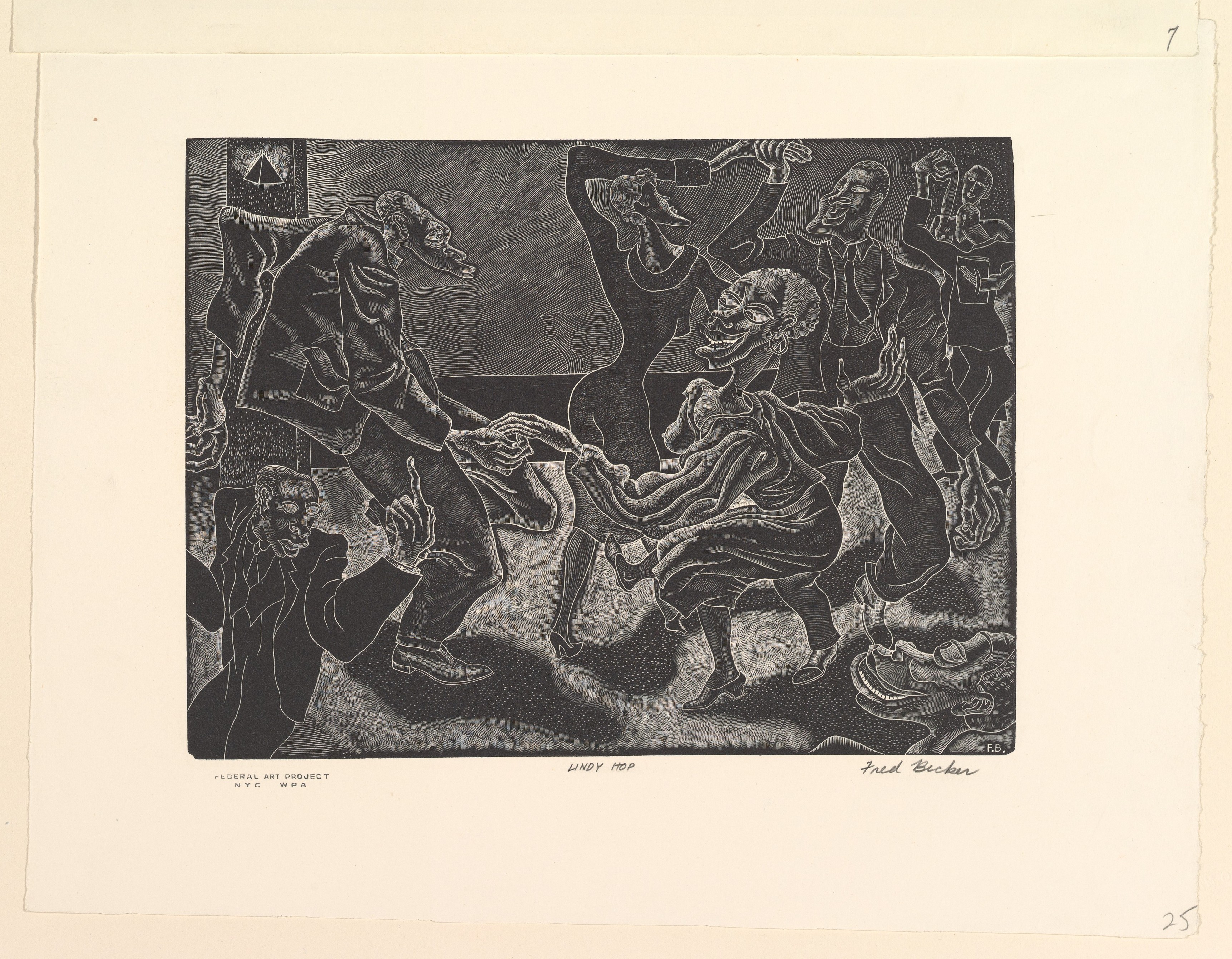
What Is Lindy Hop?
Lindy Hop is a partnered swing dance most commonly associated with the big band jazz of the late 1920s through the 1940s. It is usually built around an eight-count rhythm, but experienced dancers move easily between eight-count patterns, six-count patterns, Charleston rhythms, breaks, jazz steps, and improvised musical choices. The most iconic move is the swingout, where the partners stretch away from each other and then redirect through a turning, elastic connection.
That elasticity is part of what makes Lindy Hop feel different from many ballroom dances. It has structure, but it is not only a set of figures. It is a conversation with a partner, with the band, and with the floor around you. The leader and follower roles matter, but so does individual rhythm. Followers improvise. Leaders improvise. Both dancers can answer the music. In the best Lindy Hop, the partnership has enough clarity to stay together and enough freedom to surprise itself.
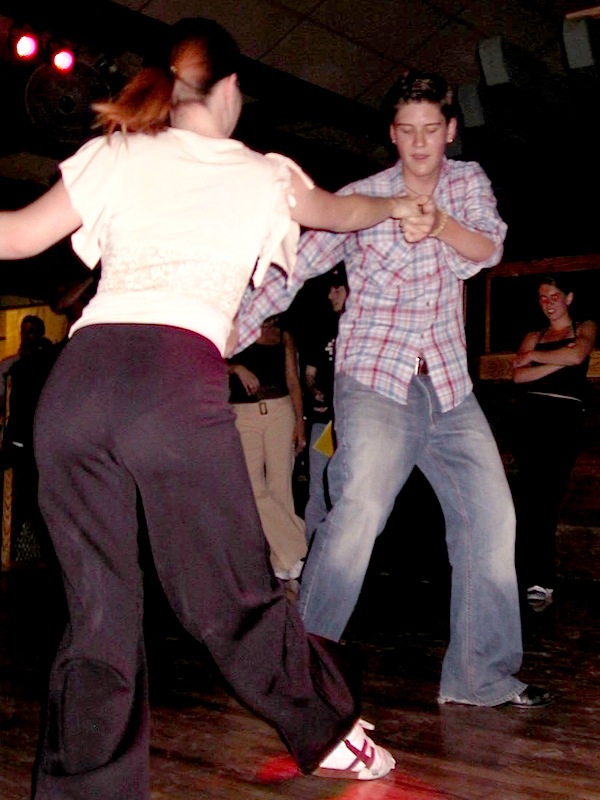
Harlem, Jazz, and the Roots of the Dance
Lindy Hop did not appear from nowhere. It came from a dense world of African American music and dance in New York, especially Harlem, where jazz, blues, ragtime, tap, Charleston, breakaway, and other vernacular forms fed one another. The “breakaway” was especially important because it loosened the closed ballroom hold: partners could separate, improvise, and come back together. That idea sits at the heart of Lindy Hop.
The 1920s were also the age of the Harlem Renaissance, Prohibition nightlife, dance marathons, professional floorshows, and fierce neighborhood dance reputations. Social dancers were not waiting for a syllabus. They built dances in public, in real time, responding to musicians who were themselves stretching American music. Lindy Hop’s genius is that it preserved the social joy of a partner dance while making room for individual jazz expression.
Where Did the Name “Lindy Hop” Come From?
The most famous naming story centers on George “Shorty” Snowden, one of the early great dancers at the Savoy. According to the story preserved by dancers and later repeated in Lindy Hop histories, Snowden was asked what he was doing during a dance marathon after Charles Lindbergh’s 1927 transatlantic “hop.” His answer became the phrase “Lindy Hop.”
Like many origin stories from living dance traditions, the details are debated. What matters is that the name attached itself to a dance that was already developing among Harlem dancers. The Frankie Manning Foundation notes both the popular Snowden story and the later questions around it, while also preserving Frankie Manning’s recollection that he heard the story from Shorty George himself. A good history should hold both truths: the story is culturally important, and the exact documentary trail is not as tidy as a textbook might wish.
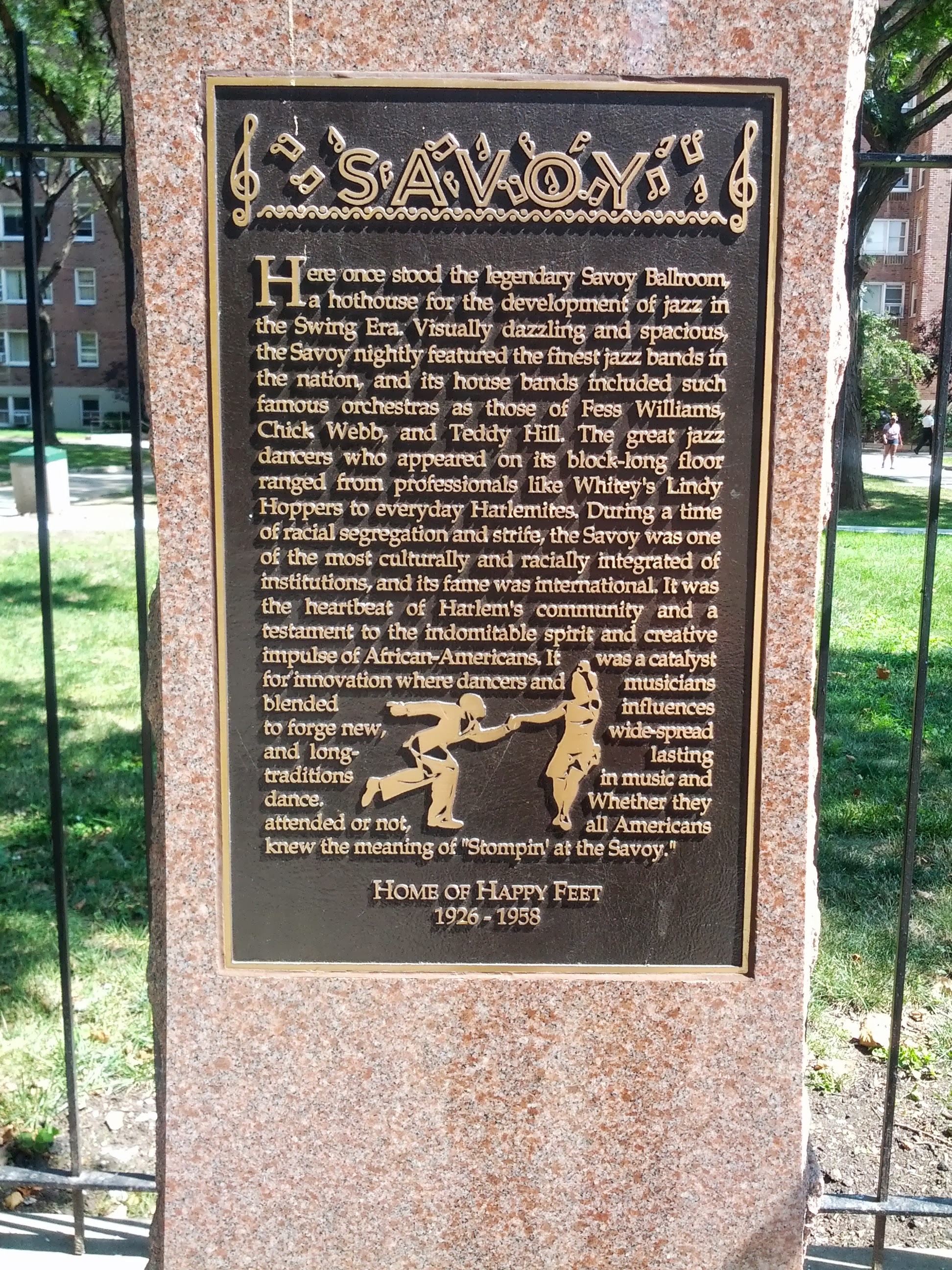
The Savoy Ballroom: The Home of Happy Feet
The Savoy Ballroom opened on March 12, 1926, on Lenox Avenue between 140th and 141st Streets in Harlem. It became the room most closely associated with Lindy Hop because it gave dancers exactly what the dance needed: space, music, competition, and a mixed crowd that cared about skill. The Savoy had a long spring-loaded dance floor, two bandstands, and a reputation for continuous music. Bands could trade sets without leaving the dancers stranded.
The Savoy was also significant socially. It was one of the rare large public venues of its era where Black and white patrons could share the same dance floor. That did not erase the racism of the surrounding society, the entertainment industry, or the economics of who profited from Black creativity. But inside the ballroom, dance ability carried unusual weight. Dancers have often remembered the Savoy as a place where the question was not simply who you were, but whether you could dance.
At the Savoy, dancers sharpened one another. The best-known corner of the room, often called Cats’ Corner, became a proving ground for top dancers. The ballroom hosted famous battles of the bands, and house bands such as Chick Webb’s gave dancers the pulse that Lindy Hop required. Lindy Hop was not separate from swing music; it was one way the music became visible.
Shorty George, Big Bea, and the First Generation
Before Frankie Manning became the name most modern dancers know, the Savoy already had heroes. Shorty George Snowden and his partner Big Bea were central to the early era. Snowden was a comic, rhythmically inventive dancer whose short stature became part of his style rather than a limitation. He helped establish the dance’s competitive personality and formed one of the first professional Lindy Hop troupes, the Shorty Snowden Dancers.
The earliest Lindy Hop was more grounded than the flying version many people know from later movie clips. It included breakaway, Charleston, rhythmic footwork, and social improvisation. Over time, younger dancers at the Savoy pushed the dance toward faster, more dramatic performance. That generational pressure is part of the story: Lindy Hop kept changing because dancers kept trying to outdo and delight one another.
Frankie Manning and the Air Step
Frankie Manning is often called the ambassador of Lindy Hop, and for good reason. Born in 1914, Manning grew up in Harlem’s dance world and eventually reached the Savoy, which he later compared to “college” after earlier experiences at the Alhambra and Renaissance ballrooms. In 1934, Herbert “Whitey” White invited him into the elite professional troupe that became known as Whitey’s Lindy Hoppers.
Manning helped change the look of performance Lindy Hop. He developed ensemble choreography, emphasized a more horizontal, driving body line, and introduced the famous air step, or aerial, in a 1935 Savoy competition. In an air step, one partner leaves the floor, usually in a choreographed performance context. These moves became spectacular crowd-pleasers, but they were never the whole dance. On a social floor, Lindy Hop remained grounded, musical, and conversational.
That distinction matters for beginners. The viral clips are thrilling because they show elite performers. They are not instructions to throw someone over your shoulder at a local social. Lindy Hop’s deeper magic is in rhythm, pulse, swingout timing, breaks, and shared play. The aerials are fireworks. The dance itself is the music moving through two people.
Whitey’s Lindy Hoppers and the Movie Version of Swing
Herbert “Whitey” White, a former boxer and Savoy bouncer, organized top dancers into professional groups that toured theaters, appeared in films, and represented Harlem Lindy Hop to audiences far beyond New York. Whitey’s Lindy Hoppers included Frankie Manning, Norma Miller, Al Minns, Leon James, Willa Mae Ricker, Ann Johnson, and many others whose names deserve to be remembered alongside the better-known bandleaders of the Swing Era.
Their best-known filmed appearance is the Lindy Hop sequence in Hellzapoppin’ (1941). The routine is breathtaking: fast, comic, acrobatic, deeply musical, and almost absurdly athletic. It also carries the compromises of Hollywood. Black dancers were often featured in isolated numbers that could be cut for segregated audiences, and the film industry profited from Black artistry while offering limited recognition and opportunity. Even so, the clip remains one of the clearest records of high-level Swing Era Lindy Hop performance.
How Lindy Hop Moved to the West Coast
Lindy Hop did not stay in Harlem. Dancers traveled for work, contests, theater tours, military service, and film opportunities. Hollywood wanted swing energy on screen, and Los Angeles already had its own active dance culture, including Balboa and other regional swing dances. When Lindy Hop reached Southern California, it entered a different ecology: crowded ballrooms, film choreography, camera angles, studio rehearsal, and a dance community shaped by both local tastes and the national swing craze.
The most important name in this migration is Dean Collins. Collins had danced in New York, including at the Savoy, before moving west in the 1930s. In Los Angeles he became a prominent dancer, teacher, and choreographer. He appeared in many films and helped make a smoother, more linear version of Lindy Hop visible on screen. His best-known partner, Jewel McGowan, is still studied by dancers for her swivels, precision, posture, and extraordinary control.
This West Coast version is often called Hollywood-style Lindy Hop, Smooth style, or sometimes Dean Collins style. The labels are not always used consistently. In broad terms, Hollywood-style Lindy often looks more upright, smoother, and more slotted than the rounder, more explosive image many dancers associate with Savoy performance Lindy. The follower may travel more clearly along a line, and the dance can feel especially polished in filmed routines.
It is tempting to draw a straight line from Dean Collins to modern West Coast Swing, but the truth is more nuanced. West Coast Swing does share roots with Lindy Hop and Southern California swing dancing, and Collins is part of that ancestry. But Hollywood-style Lindy Hop is not simply modern West Coast Swing under an older name. It was still Lindy Hop: swing music, swingouts, rhythm changes, and jazz-era partner conversation, shaped by a different regional and cinematic environment.
Savoy Style vs. Hollywood Style
The phrase “Savoy style” can be useful, but it can also oversimplify. Frankie Manning himself emphasized that dancers at the Savoy had individual styles. Some were comic, some athletic, some smooth, some rhythmically dense, some flashy. There was no single official Savoy syllabus.
Still, dancers often use “Savoy style” to point toward a grounded, rhythmically charged, circular or rotational look associated with Harlem social dancing and Whitey’s Lindy Hoppers. “Hollywood style” usually points toward the smoother, slotted, film-visible line associated with Dean Collins, Jewel McGowan, Jean Veloz, and the Southern California scene. The difference is not that one is authentic and the other is fake. Both are historical. Both are selective. Both are shaped by who was filmed, who was remembered, who taught the revival generation, and what modern dancers chose to reconstruct.
For modern dancers, the most useful question is not “Which style wins?” It is “What does this music ask for, what does my partner feel, and what lineage am I drawing from?” Lindy Hop has always rewarded dancers who listen.
War, Jitterbug, and the Decline of the Big Band Era
During World War II, swing dancing traveled with soldiers, USO shows, recordings, and wartime entertainment. “Jitterbug” became a popular umbrella term for energetic swing dancing, though people used it in different ways depending on region and decade. Lindy Hop, East Coast Swing, jive, boogie woogie, and other related dances overlapped in public imagination.
After the war, the conditions that had supported big-band Lindy Hop changed. Large live bands became more expensive. Jazz moved toward bebop, which was brilliant listening music but less suited to the same mass social-dance patterns. Rhythm and blues, jump blues, rock and roll, and smaller dance floors encouraged different movement. Studios and chains simplified swing into teachable forms. Lindy Hop never vanished completely, but it lost its central place in American popular dance.
The Lindy Hop Revival
In the 1980s and 1990s, dancers in the United States, Sweden, the United Kingdom, and elsewhere began searching for the original swing-era dancers. Frankie Manning, Al Minns, Norma Miller, and others became living bridges back to the Savoy generation. Manning’s return to teaching was especially important. He did not simply preserve steps; he transmitted values: rhythm, joy, partnership, humility, humor, and respect for the music.
The revival was not one thing. Some dancers reconstructed routines from film. Some studied directly with elders. Some emphasized Hollywood style. Some emphasized Savoy-inspired movement. Some came through neo-swing music and vintage fashion. Over time, the scene matured, and more dancers began talking seriously about Lindy Hop’s Black American roots, the ethics of cultural memory, and the need to credit original artists rather than treating the dance as generic nostalgia.
What Lindy Hop Looks Like Today
Modern Lindy Hop is danced at weekly socials, exchanges, workshops, competitions, camps, and festivals around the world. A typical social dance might include relaxed six-count basics, swingouts, circles, side passes, tuck turns, Charleston variations, solo jazz breaks, and playful musical responses. Good dancers learn technique, but the goal is not sterile perfection. The goal is to swing.
The music still matters. Count Basie, Chick Webb, Duke Ellington, Ella Fitzgerald, Jimmie Lunceford, Lionel Hampton, and Benny Goodman remain common reference points, but modern DJs also use small-group jazz, New Orleans jazz, jump blues, and contemporary bands that play in vintage swing idioms. Faster songs invite compact rhythm and efficient movement. Slower songs open space for stretch, delay, and conversation.
If you are new to Lindy Hop, the best entry point is not the aerials. Start with pulse, rhythm, connection, and social-floor etiquette. Learn the swingout patiently. Learn a few solo jazz steps. Listen to the music until you can feel the phrase endings. Watch historic clips, but do not copy them as costumes. Treat them as invitations into a living tradition.
Why Lindy Hop Still Matters
Lindy Hop matters because it is one of America’s great social dances. It carries the invention of Black dancers, the sound of swing music, the public life of Harlem, the glamour and compromises of Hollywood, and the stubborn joy of people gathering in rooms to move together. It is historical, but it is not frozen. Every social dance adds a tiny new footnote.
That may be why Lindy Hop keeps coming back. It offers something rare: a dance with real roots, real technique, real improvisation, and real community. It can be elegant, ridiculous, athletic, subtle, romantic, comic, or cool, sometimes within the same chorus. The dance began in a particular place and time, but its central promise is timeless: hear the band, find a partner, and make the rhythm visible.
Further Reading and Viewing
- Savoy Ballroom history from the Savoy Ballroom plaque project.
- Shorty George Snowden from the Frankie Manning Foundation.
- Frankie Manning biography from the National Endowment for the Arts.
- Hellzapoppin clips curated by Lindy Collection.
- Savoy Ballroom clips curated by Lindy Collection.
- Dance Forums discussion on Dean Collins, including notes on his Hollywood career and West Coast influence.