

Short Form Choreography: What It Is and 5 Videos to Try
Short form choreography is dance made for a small frame: a short video, a quick class combination, a social media challenge, or a compact phrase that can be learned and repeated without committing to a full routine. It is not just “easy choreography” and it is not automatically shallow. At its best, short form choreography gives dancers one clear idea to practice: a groove, a rhythm, a transition, a hook, a musical accent, or a small piece of performance quality.
That makes it useful for a lot of dancers. Beginners get something finishable. Social dancers get a way to practice body coordination outside of partner patterns. Experienced dancers can use short phrases to test musicality, texture, and style without spending weeks on a staged routine.
What Is Short Form Choreography?
Short form choreography is usually built around a phrase that can stand on its own. It might be eight counts, sixteen counts, thirty seconds, or one memorable section of a song. The important part is that the dancer can learn the shape of it quickly enough to repeat it, film it, or use it as a practice study.
In online dance culture, the phrase often overlaps with TikTok dances, YouTube Shorts, Reels, and other platform-friendly formats. But short form choreography also shows up in studio classes, warmups, audition combinations, wedding dance prep, fitness dance, jazz drills, hip hop grooves, and even partner-dance solo practice.
The form rewards clarity. A full routine can take time to develop its arc. A short phrase has to make its point fast. That is why strong short form choreography usually has one or two memorable features: a hand rhythm, a groove, a direction change, a freeze, a body roll, a level change, or a lyric-driven accent.
How to Practice a Short Choreography Video
Do not start by trying to perform the whole thing at speed. Watch once without moving. Then learn the feet. Then add the arms. Then add timing. Only after the sequence is in your body should you start thinking about performance, camera angle, facial expression, or personal style.
A good practice pattern is simple: learn four counts, repeat them several times, then attach the next four counts. If a video teaches more than you want, choose the most interesting section and make that your short form choreography study for the day.
It also helps to record yourself, even if you never post the result. Short form choreography is often designed for the camera, so filming gives you useful feedback about shape, timing, and energy. You may feel like you are doing a big movement and then discover on video that it needs more clarity.
5 Short Form Choreography Videos to Try
The videos below are not meant to represent every style. They are a practical starting set: social-platform choreography, beginner hip hop, house, contemporary jazz, and pop dance. Try one that matches your comfort zone, then try one that does not.
1. TikTok-Style Short Form Choreography
This is close to what many people mean when they search for short form choreography: a compact, repeatable phrase designed to be learned quickly and shared. Even if you are not interested in posting, this kind of tutorial is useful for coordination, timing, and confidence in front of a camera.
A direct example of short form choreography built for social platforms: compact, repeatable, and easy to revisit phrase by phrase.
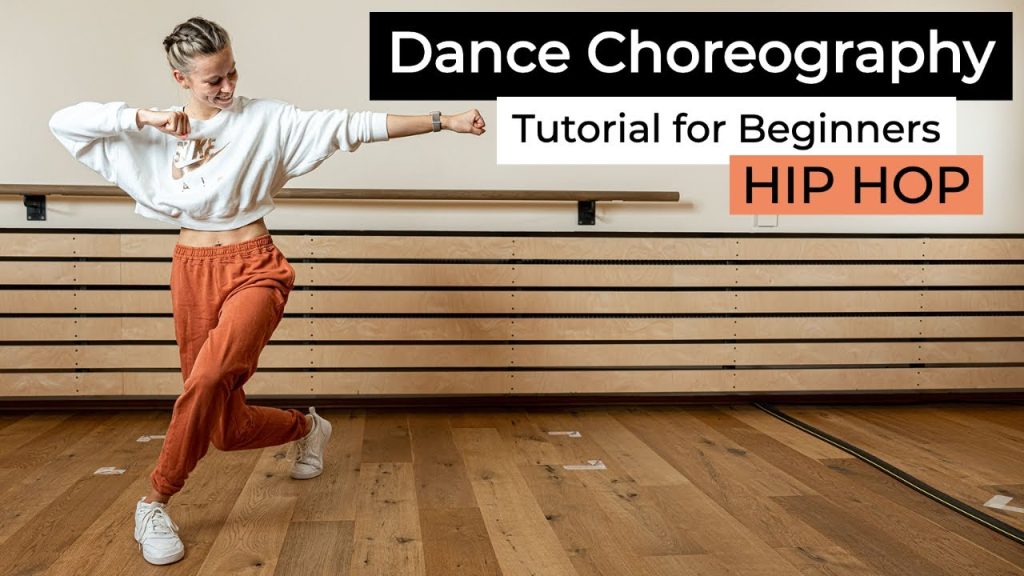
2. Beginner Hip Hop Choreography
This tutorial is a good place to start if you want something more class-like than a challenge dance. The phrase gives you a clearer choreographic structure while staying approachable for newer dancers.
A beginner-friendly hip hop tutorial with enough structure to feel like choreography, but not so much material that it becomes overwhelming.
3. Short House Choreography
House-based short choreography is especially useful because it makes you deal with groove. The steps are not only shapes; they need bounce, pulse, and a relationship to the beat. That makes this a good study even for dancers from other styles.
A short house-based choreography lesson that is useful for dancers who want groove, footwork, and musical repetition.
4. Contemporary Jazz Phrase
If your goal is expression rather than social-platform repetition, a contemporary jazz phrase can be a better fit. Look for how the movement carries through the body, not just where the limbs land.
A contemporary jazz option for dancers who want a short phrase with more flow, shape, and expressive timing.
5. Pop-Dance Combination
Pop tutorials often sit between challenge choreography and studio choreography. They can be a fun way to practice accents, quick transitions, and performance energy without learning a full-length routine.
A pop-dance tutorial that shows how a short phrase can be taught quickly while still giving dancers a complete combination to practice.
What Makes a Short Phrase Worth Learning?
A useful short phrase gives you something specific to improve. If the choreography is too random, you may finish it without learning much. If it is too complicated, you may spend the whole time chasing steps and never get to the dancing. The best short form choreography is compact but not empty.
Look for one of these practice goals:
- Timing: Can you hit the rhythm cleanly without rushing?
- Texture: Can you make one move sharp and the next one smooth?
- Groove: Can you keep the pulse underneath the steps?
- Memory: Can you repeat the phrase without staring at the teacher?
- Performance: Can you make the movement readable on video?
How It Helps Social and Partner Dancers
Short form choreography is not only for solo dancers. Partner dancers can benefit from it too. A small solo phrase improves balance, body awareness, rhythm, and the ability to finish your own movement. Those skills carry directly into social dancing, where styling and musical response often happen in tiny windows of time.
For West Coast Swing, salsa, bachata, hustle, tango, or ballroom dancers, the point is not to import every move into partner dancing. The point is to sharpen your body. When you understand how to learn and perform a short phrase, you become better at noticing weight changes, accents, and transitions in any dance.
Final Thought
Short form choreography works because it lowers the barrier to starting. You do not need a stage, a partner, or a full routine. You need a phrase, a little room, and enough patience to repeat it until the movement starts to feel less borrowed and more like yours.
Pick one video above, learn only the first section, and then do it three ways: small and clean, full-out, and finally with your own texture. That is where short choreography becomes more than a clip. It becomes practice.