

The History of Ballroom Dancing in America
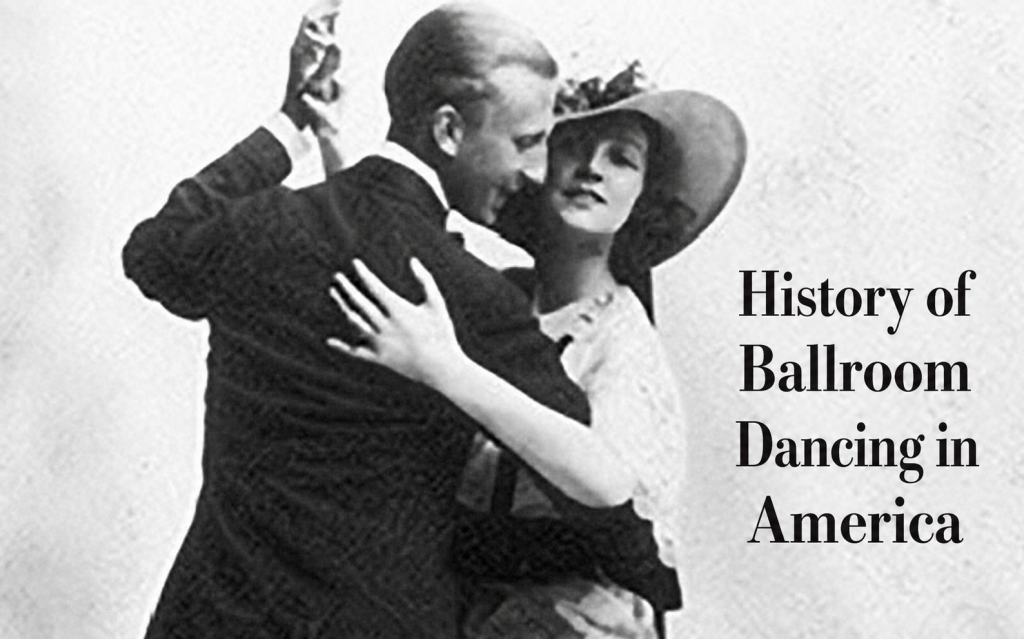
Ballroom dancing in America has never been one fixed tradition. It is a meeting place: European couple dances, African American rhythm and innovation, Latin American music and movement, immigrant teachers, vaudeville, Hollywood, neighborhood dance halls, national studio chains, and finally the highly organized world of DanceSport.
That is why its history cannot be reduced to a straight line from the waltz to the competition floor. In the United States, ballroom has repeatedly moved between three overlapping worlds: social dancing, where ordinary people meet and move together; commercial teaching, where studios turn changing fashions into learnable systems; and competition, where dancers, coaches, and governing organizations define standards and keep pushing technique forward.
Before the Castles: America Was Already Dancing
Long before anyone used the word DanceSport, Americans were adapting European ballroom forms to local life. Waltzes, polkas, quadrilles, two-steps, and other nineteenth-century dances circulated through public ballrooms, private homes, social clubs, dance academies, and immigrant communities. By the opening years of the twentieth century, ragtime music and a wave of freer “animal dances,” including the Turkey Trot and Grizzly Bear, were challenging older ideas of how a respectable couple should move.
Those changes did not come from elite ballrooms alone. African American social dance and music were central to the new rhythmic culture, even when white performers and publishers received more credit and greater commercial opportunity. Latin American dances also entered U.S. popular culture through ports, theaters, touring performers, and the international fascination with tango and the Brazilian maxixe.
The result was a national debate about modern dancing. Critics saw danger in close holds, syncopation, and youthful freedom. Supporters saw vitality, sociability, and a distinctly modern way for women and men to share public space. Into that debate stepped the most famous dancing couple of the era.
Vernon and Irene Castle and the Ragtime Revolution
Vernon and Irene Castle became stars after performing American ragtime dances in Europe and returning to New York in 1912. They did not invent every dance associated with them. Their extraordinary gift was to refine, demonstrate, teach, package, and popularize the new social dancing for a huge middle- and upper-class audience.
The Castles replaced the more boisterous image of the animal dances with an upright, flowing, apparently effortless style. They were fashionable, married, and publicly respectable. That image helped make modern couple dancing acceptable to people who might otherwise have considered it vulgar. Their school, Castle House, their nightclub appearances, touring exhibitions, magazine coverage, silent film, and 1914 manual Modern Dancing turned them into both performers and a national teaching brand.
Their repertory provides a snapshot of the 1910s ballroom:
- One-step: a direct walking dance to ragtime, flexible enough for social dancers and exhibitions.
- Castle Walk: the couple’s signature variation, built around confident forward walking, lifted posture, and rhythmic ease.
- Hesitation waltz: a modernized waltz in which dancers lingered or “hesitated” over part of the measure instead of turning continuously.
- Tango: adapted for the American and European social ballroom during the international tango craze.
- Maxixe: a Brazilian dance whose syncopation and body action fascinated prewar audiences.
- Foxtrot: the new dance they helped smooth, codify, and carry into the mainstream after it appeared around 1914.
The Castles were not alone. Maurice Mouvet and Florence Walton were an internationally successful exhibition team especially associated with tango, while Joan Sawyer demonstrated fashionable dances in vaudeville, nightclubs, and private society engagements and published her own foxtrot instruction. These performers were part of a larger profession of exhibition dancers who showed audiences what the newest dance was supposed to look like.
James Reese Europe: The Sound Behind the Dancing
No account of the Castles is complete without James Reese Europe, the pioneering Black bandleader, composer, and organizer who served as their musical director. Europe had already founded the Clef Club, which functioned as a professional organization and booking agency for Black musicians, and in 1912 he conducted a major concert by Black musicians at Carnegie Hall.
With the Castles, Europe supplied more than accompaniment. His orchestra gave modern dancing its rhythmic force. Their 1914 recording, “The Castles in Europe One-Step (Castle House Rag),” preserves an unusually vivid example of Black dance music from the period and was later added to the National Recording Registry. The partnership was also strikingly visible at a time when public integration was rare. The Castles became the faces of the craze, but Europe and his musicians helped create its sound.
Did Harry Fox Invent the Foxtrot?
The familiar story says that vaudeville comedian Harry Fox performed trotting steps on the roof of New York’s Theatre in 1914 and that “Fox’s trot” became the foxtrot. Fox was a real performer, his name was associated with the dance early, and he may well have helped popularize it. The claim that he single-handedly invented the foxtrot, however, is too neat.
Dance historians have found several competing origin stories. Contemporary accounts connected the foxtrot to the one-step, ragtime, and dances already practiced in Black social settings. The Routledge Encyclopedia of Modernism describes it as emerging around 1914, most likely from African American practices, while noting that its name later encouraged claims of invention by Harry Fox. A valuable collection of period sources at the Library of Dance likewise finds no simple documentary trail proving the popular Harry Fox story.
The fairest conclusion is that Harry Fox belongs in foxtrot history as a possible namesake and early popularizer—not as the undisputed inventor of a dance that developed from a much wider social and musical culture. Readers have debated this same origin story on Dance Forums.
War, Jazz, Hollywood, and the American Dance Hall
World War I cut short the Castles’ partnership. Vernon served as a military pilot and died in a training accident in Texas in 1918. Yet the appetite they helped create survived. During the 1920s and 1930s, foxtrot became a durable social language, while radio, records, hotel orchestras, cabarets, and movie palaces made dance music available on an unprecedented scale.
Hollywood offered a new ideal. Fred Astaire and Ginger Rogers did not simply preserve the Castles’ style, but their films carried the fantasy of graceful partner dancing to a mass audience. Long camera takes allowed viewers to see whole phrases and full bodies in motion. Astaire’s easy-looking musicality and Rogers’s precision, responsiveness, and dramatic presence made ballroom movement part of the American imagination even for people who had never entered a formal studio.
At the same time, the most important innovations in swing dancing were coming from Black dancers and musicians. At Harlem’s integrated Savoy Ballroom, dancers developed Lindy Hop into a rhythmically adventurous form built around swing music, improvisation, breakaway, and aerial movement. Frankie Manning, Norma Miller, Al Minns, and the dancers associated with Whitey’s Lindy Hoppers brought that creativity to stage and film. Lindy Hop is not one of today’s traditional competition ballroom divisions, but its history is inseparable from the broader American story of partner dancing.
During World War II, big-band music and swing dancing became part of wartime social life. USO clubs, canteens, military bases, community halls, and ballrooms offered service members and civilians recreation, morale, and a brief sense of normalcy. Soldiers carried jitterbug and swing practices across the country and overseas. Wartime movement helped spread dances beyond the communities in which they had first flourished, even as segregation and unequal access continued to shape who received credit and opportunity.
Teaching America to Dance: Arthur Murray and Fred Astaire Studios
Mass enthusiasm does not automatically create lasting technique. Dance studios supplied the bridge between seeing a dance and being able to do it.
Arthur and Kathryn Murray
Arthur Murray, born Moses Teichman, began teaching in New York in 1912. He became a brilliant marketer of social dancing, selling mail-order lessons illustrated with footprint diagrams and experimenting with radio instruction. The company’s history dates his first formal Manhattan studio to 1925 and the beginning of franchising to 1938.
Kathryn Murray was essential to the enterprise. Together, the Murrays made dancing feel learnable, social, and modern. Their studios turned changing dance fashions into organized curricula that teachers could deliver across the country. The system did more than reproduce steps: studio parties, medal programs, showcases, and later competitions created a complete social world around lessons.
From 1950 to 1960, The Arthur Murray Party brought lessons, celebrity guests, and dance entertainment into American living rooms. In that respect, the Murrays anticipated the modern relationship between television and ballroom: viewers watch professionals, recognize a dance, and begin to imagine themselves doing it.
Fred Astaire Dance Studios
Fred Astaire Dance Studios was co-founded in 1947, with its first location on Park Avenue in New York. According to the organization’s official history, Astaire helped shape its curriculum and instructional methods so that his approach to movement could be passed on to the public.
The Astaire name connected the neighborhood dance lesson to Hollywood elegance. The studio system could not turn every student into a movie star, but it could offer an organized path from the first box step to social dancing, exhibitions, and competition. Together with Arthur Murray studios and thousands of independent teachers, the chain helped preserve partner dancing through the postwar rise of rock and roll, television, youth culture, and solo dance fashions.
The two franchises developed distinct curricula and studio cultures, a subject dancers still discuss in the Dance Forums thread “Fred Astaire vs. Arthur Murray.” Historically, however, their shared importance is larger than their differences: both made ballroom instruction repeatable, national, and commercially sustainable.
American Style Takes Shape
American ballroom did not merely import an international system. It developed its own competition traditions.
American Smooth grew around waltz, tango, foxtrot, and Viennese waltz, allowing partners to move between closed hold, open positions, side-by-side work, and underarm turns. That freedom preserved a visible connection to social dancing, exhibition ballroom, and the screen tradition of Astaire and Rogers.
American Rhythm organized cha cha, rumba, East Coast swing, bolero, and mambo into a competitive division with its own timing, technique, and performance character. Its development reflects the enormous impact of Afro-Cuban, Caribbean, and Latin music on American social life—though turning community dances into a studio syllabus inevitably changes them.
At the United States championships, a single American Style title was split into separate Smooth and Rhythm championships in 1984. That decision gave both forms room to grow more specialized and more ambitious. The evolution of Smooth, in particular, remains an active topic in the forum’s History of American Smooth discussion.
From Ballroom Competition to DanceSport
Ballroom competitions existed well before the term DanceSport became common, but the postwar decades brought increasing organization. The National Dance Council of America was formed in 1948 as the National Council of Dance Teacher Organizations. Its early purpose was to unite professional teaching organizations, raise standards, and regulate recognized competitions. In 1962 it joined the international professional ballroom council now represented by the World Dance Council.
The American Ballroom Company began the official United States Ballroom Championships in 1971 at the Waldorf Astoria. The event later became the United States Dance Championships, and its history tracks the expansion of divisions, age groups, Pro/Am competition, and the split of American Style into Smooth and Rhythm.
A parallel amateur and sport-oriented tradition developed through the organization now called USA Dance. Its history reaches back to 1965, when dancers organized in part around the goal of Olympic recognition. The World DanceSport Federation received International Olympic Committee recognition in 1997, and USA Dance received affiliate membership in the U.S. Olympic movement in 1999.
American DanceSport therefore does not operate as one simple pyramid. Professional, amateur, collegiate, studio, and Pro/Am competitors may dance in related but distinct systems. The word sport emphasized athletic training, codified rules, judging, and national representation; the word ballroom continued to describe an art form, a profession, a social pastime, and a culture. In America, both words remain necessary.
Champions Who Changed What American Ballroom Could Be
A complete list of U.S. champions would fill a book. The following couples are selected because their title runs also illustrate major changes in American ballroom. The championship years come from the NDCA’s official records.
Ronald Montez and Elizabeth Curtis: a U.S. Latin dynasty
Ronald Montez and Elizabeth Curtis won seven consecutive U.S. Professional Latin titles from 1979 through 1985. Their run helped establish a recognizable American Latin lineage before today’s globally mobile competitive circuit. Curtis later brought that knowledge into coaching, stage production, television specials, and choreography for the film Dance with Me, helping connect championship dancing to a wider audience.
Ron Montez and Elizabeth Curtis give their farewell performance at the 1986 Ohio Star Ball.
Corky and Shirley Ballas: competition knowledge becomes a coaching legacy
Corky and Shirley Ballas succeeded them as U.S. Professional Latin champions from 1986 through 1990. Their careers show how championship influence extends beyond results: elite dancers become teachers, adjudicators, parents, mentors, and television personalities, passing competitive knowledge into the next generation and across national borders.
Corky and Shirley Ballas in the Latin final at the 1991 Ohio Star Ball.
Bob Powers and Julia Gorchakova: defining American Rhythm
Bob Powers and Julia Gorchakova dominated U.S. Professional Rhythm from 1993 through 2004. Twelve consecutive titles gave a maturing division a sustained technical and performance reference point. Their continuing work as teachers, coaches, organizers, and adjudicators helped turn American Rhythm from a collection of popular dances into a deep competitive discipline.
Bob Powers and Julia Gorchakova dance mambo on the 1996 PBS broadcast of Championship Ballroom Dancing.
Michael Mead and Toni Redpath: expanding American Smooth
Michael Mead and Toni Redpath were undefeated U.S. Professional Smooth champions from 1999 through 2002. Their dancing and later choreography helped demonstrate how Smooth could combine ballroom mechanics with open work, musical storytelling, and theatrical scale. Their appearances on PBS ballroom programs and choreography for So You Think You Can Dance also carried American Smooth vocabulary beyond the competition audience.
Toni Redpath and Michael Mead dance Viennese waltz on the 2001 PBS broadcast of Championship Ballroom Dancing.
Katusha Demidova and the globalization of U.S. Standard
Katusha Demidova held the U.S. Professional Ballroom title with Jonathan Wilkins from 1998 through 2007 and with Arunas Bizokas from 2008 through 2017. That remarkable continuity coincided with a more international American circuit in which leading dancers trained, taught, immigrated, and competed across borders. The United States became not simply a national market but one of the principal homes of global professional ballroom.
Jonathan Wilkins and Katusha Demidova dance waltz at the Ohio Star Ball, broadcast on PBS in 1999.
Riccardo Cocchi and Yulia Zagoruychenko: world-class Latin based in America
Riccardo Cocchi and Yulia Zagoruychenko won U.S. Professional Latin titles from 2008 through 2016 and again in 2018 and 2019 while also becoming dominant world champions. Their speed, body action, musical detail, and competitive consistency raised the level dancers in American studios could study at close range. Like many modern champions, their contribution is simultaneously American and international.
Riccardo Cocchi and Yulia Zagoruychenko dance cha-cha at the 2019 WDC World Professional Latin Championship.
These champions did not build ballroom alone. Coaches, scrutineers, organizers, musicians, costume makers, studio owners, social dancers, and less-famous teachers all shaped the culture. As one Dance Forums discussion about ballroom icons observes, some master teachers never had the competitive career that would make their names easy to remember, yet great dancers would not exist without them.
Ballroom in America Today
Modern American ballroom contains many histories at once. A wedding couple learning a foxtrot, a senior dancing socially, a collegiate team practicing International Standard, a Pro/Am student entering American Rhythm, and a professional Smooth finalist all belong to the same broad ecosystem, even if their goals and techniques differ.
Television periodically renews public interest, but the real continuity still comes from studios, clubs, competitions, community dances, and people willing to teach a beginner. The Castles understood the power of demonstration. James Reese Europe understood the power of music. Arthur and Kathryn Murray understood systems and access. Fred Astaire understood the ideal that makes someone want to take a first step. DanceSport champions showed how far disciplined partnership could go.
The history of ballroom dancing in America is therefore not a march from primitive steps to perfect technique. It is a continuing exchange between communities and stages, between social pleasure and competitive ambition, and between borrowed forms and American reinvention. Every generation receives a dance, changes it, and passes it on.