

Ballroom Culture Terms and Definitions
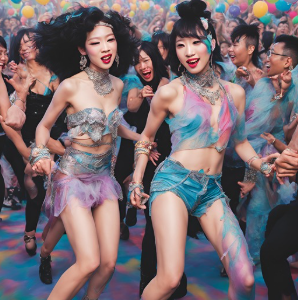
Ballroom culture—also called the ballroom scene—is a performance tradition that began in the Black and Latino LGBTQ+ communities of New York City in the late 20th century. Built around creativity, personal expression, and chosen family structures known as houses, ballroom events (“balls”) feature competitive categories ranging from fashion and runway to voguing, floor performance, face, realness, and dramatic stunts.
If you have a background in partner dancing, ballroom culture is very different from what we call ballroom dance. Rather than waltz, tango, or foxtrot, these categories focus on individuality, attitude, storytelling, and presentation. Each term has a specific meaning within the community and contributes to the history, scoring, and artistry of ballroom performance.
This page provides a clear glossary of widely used ballroom terms—many of which appear in dance competitions, documentaries, and pop culture today. Whether you’re new to the scene or exploring the roots of voguing, this guide will help you understand the language and traditions that shape ballroom culture.
Last updated: August 19, 2026. Ballroom language continues to evolve, and meanings can vary among houses, cities, generations, and scenes. This glossary is an introduction, not a replacement for learning from ballroom practitioners and elders.
Jump to: A–D · H–M · N–R · S–W · Brief history · Sources
Ballroom glossary: A–D
Angel – A performer in Vogue Femme who uses soft, delicate movements.
Arms Control – The art of executing precise and fluid arm and hand movements, often involving tricks or creating illusions.
Battle – A competitive face-off between two performers, either at or outside of a ball, to showcase skill and style.
Bizarre – A category focused on avant-garde or unusual fashion choices, where creativity and strangeness are celebrated.
Box Dip – A floor move where the performer balances on their forearms with their legs over their head, feet planted in front.
Butch Queen – A gay man who may range from masculine to feminine in presentation, depending on the category.
Cat-walk – A signature walking style in Vogue Femme, characterized by exaggerated strutting and posing while upright.
Clicking – A contortion move where the arms are locked together and manipulated over the head and behind the back.
Crafted – Items obtained through dishonest means, often referring to fashion pieces used in ballroom.
Devil – A Vogue Femme performer known for dramatic and stunt-heavy performances.
Dip – A controlled move in which the performer drops toward the floor, often at a musical climax. It is sometimes called a “death drop” outside ballroom, but many ballroom practitioners prefer the term dip.
Duck-walk – A low, crouched walking style in vogue, where the performer slides and shuffles on the balls of their feet.
Ballroom glossary: H–M
Hairpin – An extreme backbend where the head touches or comes very close to touching the back or legs.
Hand Performance – A category focused on the use of hand gestures, tricks, and storytelling through hand and wrist movements.
House – A social group or chosen family within ballroom culture, often led by a Mother and Father, competing in balls.
Icon – A performer who has left a lasting mark on ballroom history, going beyond just being Legendary.
Kansai – An Old Way dip named after a mannequin pose seen in a Kansai Yamamoto boutique, featuring angular and sharp postures.
KiKi – A fun, low-key ball or event, often involving less competition and more emphasis on community and enjoyment.
Legendary – A title given to a performer who has won multiple trophies and established a lasting reputation in the ballroom scene.
Legendary Children – Rising stars in the ballroom scene who show promise and talent, often under the guidance of a house.
Lofting – A style of dance that combines vogue arm movements with breakdancing floor work, named after the club “The Loft.”
Makeveli – A type of dip that simulates a “suicide fall” where the performer drops to the floor in a controlled fall, using one leg as leverage.
Mop – To steal or obtain something, especially clothes or items used in ballroom performances.
Ballroom glossary: N–R
New Way – A style of voguing that emphasizes flexibility, precision, contortions, and geometric arm control, developing from the late 1980s onward.
Old Way – An earlier style of voguing associated with graceful, controlled movements, clean lines, poses, and floor work.
Pay it – To ignore or move on from a situation, especially after a disappointing judges’ decision or loss.
Pop, Dip, and Spin – An earlier name for voguing that focused on acrobatics, moving seamlessly between standing and floor work.
Punish – To outdo or defeat someone thoroughly in a performance or battle.
Reading – The art of delivering sharp, pointed insults, often in a playful or exaggerated manner, meant to call out someone’s flaws.
Realness – A category where the contestant must convincingly embody a specific identity (for example, executive or schoolboy) in appearance and demeanor.
Ballroom glossary: S–W
Scorpion – A dip inspired by martial arts, where the performer lies flat while one leg is lifted over the head.
Serve Face – When a performer focuses on facial expressions, presentation, and beauty, showcasing confidence and presence.
Shade – Subtle, underhanded insults or actions meant to belittle or criticize someone in the ballroom.
Shwam! – An exclamation used by the emcee when a performer lands an impressive stunt, particularly a dip.
Snatch – To win a competition or category, often in a decisive and spectacular manner.
Tens Across the Board – Receiving perfect scores from all the judges in a category.
Turn it – To put on an outstanding performance that captivates the audience and earns praise.
Verbal Vogue – A category where contestants exchange witty, sharp insults, often as a verbal showdown or roasting.
Vogue Femme (Vogueing Femme) – A feminine, highly expressive style organized around hand performance, cat-walk, duck-walk, floor performance, and dips. It may be soft and fluid or dramatic and stunt-heavy.
Werk – To perform with exceptional confidence, flair, and style.
A Brief History of Ballroom Culture
Ballroom culture grew out of Black and Latino LGBTQ+ communities in New York City from the 1960s onward. It began as drag pageants and underground balls where people could express gender, identity, and style without the judgment they faced in mainstream society.
Over time, these balls developed into a structured scene with houses (chosen families led by a House Mother or Father) and competitive categories such as voguing, runway, realness, face, and dramatic floor performance. For a deeper look at how houses, balls, and voguing fit together, see What Is Voguing? The History of Ballroom Culture, Houses, and Balls. Icons like Crystal LaBeija, Willi Ninja, and the House of Xtravaganza helped shape the movement and its signature style.
The documentary Paris Is Burning (1990) brought ballroom into wider public view, and later music, fashion, and TV shows carried its language and aesthetics into pop culture. Today, ballroom is a global art form and community space, still rooted in self-expression, resilience, and chosen family.
Further Reading and Sources
- Ballroom in Focus, a community-centered digital archive created with Ballroom Throwbacks and Destination Tomorrow.
- A Brief History of Voguing, National Museum of African American History and Culture.
- Jeffery Miyake-Mugler Garçon oral history, Library of Congress American Folklife Center.
- The Latex Ball: “Music Is My Life” in Celebration and Memory, GMHC.