Argentine Tango competitions

..represent realistic milonga conditions..
I completely agree with you regarding music and musicality. But that would be a different point. We should also be able to evaluate a choreography in its own right. Was a plaudible story told? Are the metaphors deep or awkward? How well are the portrayed roles characterized by typical movement patterns? How does the dance correspond with the space or floor? How is the dynamic range, and so on.

In the Escenario category, however, only a mishmash is evaluated. It's unclear what makes the difference: choreography, performance competence, artistry, musicality. Transparency is my point; the milonga is not my be-all and end-all criterium.
 
We should also be able to evaluate a choreography in its own right. Was a plaudible story told? Are the metaphors deep or awkward?
Yes, those should be the type of criteria used to judge the stage tango category. Most performances are completely boring to me, precisely because they fail to tell a story. They are the tango equivalent of Waiting for Godot.
 
World Champions: Aldana Silveyra & Diego Ortega — Tango de Pista 2025
Victory Dance:
Orquesta Juan D' Arienzo - La cumparsita

 
I've always felt that if we're going to have competition at all, for the pista category the competitors shouldn't know in advance what the music is going to be. It's supposed to represent realistic milonga conditions, but what we end up with is a bunch of choreographed pieces.
That’s strange. Are you sure? At mundial qualifiers I am certain the participants don’t which music they will be dancing to.
 
At mundial qualifiers I am certain the participants don’t which music they will be dancing to.
Having recently attended qualifiers, and even competed in a lower-profile associated event at the same time, I can confirm: The music is chosen while everybody is in the room, waiting to dance. (I'm friends with one of the DJs . . . it's very last-minute.)
 
Having recently attended qualifiers, and even competed in a lower-profile associated event at the same time, I can confirm: The music is chosen while everybody is in the room, waiting to dance. (I'm friends with one of the DJs . . . it's very last-minute.)
Which said, remember: "qualifiers." The quarter-finals, semi-finals, and finals are centralized in a way that the qualifiers are not, so there may be more planning behind the music. There is wording in the legal document about "The Organization" picking pieces and letting couples know about them. The timeline for that seems to be "in the weeks between the qualifiers and the competition in BA."

Still, that timeline is short enough that even talented couples would be hard-pressed to develop and perfect choreographies at the competition-winning level for a potential nine pieces (three for the quarter-final, three for the semi-final, three for the final) . . . It's a month, give or take, and a polished, potentially award-winning choreo to just one piece can take that long or longer! This is why escenario couples – who do choreograph – dance one piece of their choice, not three of "The Organization's" choices.

Granted, experienced couples have choreos to lots of pieces in their pocket, and the pieces selected for the competition are pulled from a small subset of danceable music that's considered "typical" and "classic," so veterans might be able to whip out an old choreo at short notice. I suppose that would give such couples an advantage of some kind.

But I've seen local couples dance to a piece at the qualifiers and then again in the competition in BA, and it's self-evidently not the same interpretation, so I don't think it's a choreo.

All of which said, remember also that winners do performances at the event as well as compete. Things like victory rounds and whatnot are probably choreographed. And often, it's that and not competition rondas that ones sees in videos. I've seen a few where the top few couples were clearly putting on a choreographed show with their competition numbers still pinned to their backs.
 
Which said, remember: "qualifiers." The quarter-finals, semi-finals, and finals are centralized in a way that the qualifiers are not, so there may be more planning behind the music. There is wording in the legal document about "The Organization" picking pieces and letting couples know about them. The timeline for that seems to be "in the weeks between the qualifiers and the competition in BA."

Still, that timeline is short enough that even talented couples would be hard-pressed to develop and perfect choreographies at the competition-winning level for a potential nine pieces (three for the quarter-final, three for the semi-final, three for the final) . . . It's a month, give or take, and a polished, potentially award-winning choreo to just one piece can take that long or longer! This is why escenario couples – who do choreograph – dance one piece of their choice, not three of "The Organization's" choices.

Granted, experienced couples have choreos to lots of pieces in their pocket, and the pieces selected for the competition are pulled from a small subset of danceable music that's considered "typical" and "classic," so veterans might be able to whip out an old choreo at short notice. I suppose that would give such couples an advantage of some kind.

But I've seen local couples dance to a piece at the qualifiers and then again in the competition in BA, and it's self-evidently not the same interpretation, so I don't think it's a choreo.

All of which said, remember also that winners do performances at the event as well as compete. Things like victory rounds and whatnot are probably choreographed. And often, it's that and not competition rondas that ones sees in videos. I've seen a few where the top few couples were clearly putting on a choreographed show with their competition numbers still pinned to their backs.
May be they are given a selection of music of which a few (subset) will actually be played at each round?

How many times they have to dance in each round? At least three? (Tango, Vals, Milonga). Or four?
 
May be they are given a selection of music of which a few (subset) will actually be played at each round?
I have no idea.
How many times they have to dance in each round? At least three? (Tango, Vals, Milonga). Or four?
Three. The rules say "pieces," "recordings," "songs," and "tracks," but at no point specify that these will be one tango, one vals, and one milonga . . . although I think that in practice, that's what's done.
 
Here is what AI summarized for me from three sources :

Structure of the Pista Section
• Couples compete simultaneously in group “rondas” (not individually).
• Each round consists of three pre-selected recorded tango pieces; the music is not disclosed in advance to competitors, emphasizing the improvisational nature of Salon tango (“tango de pista”).
• The choice of music is made by the event organizers and must be approved by the official competition supervisor from the Buenos Aires Festivals Bureau.
• Songs selected are always traditional tangos suitable for social dance, focusing on music common in milonga settings.
Sources:
1.https://www.philippinetangochampionship.com/championship
2. https://buenosaires.gob.ar/sites/default/files/2023-07/REGLAMENTO DEL MUNDIAL DE BAILE 2023 AB ingles.pdf
3. CHAMPIONSHIP - Meet Tango Festival


is #2 official rules of Mundial ? I am not sure. Someone will have to verify reading theough the rules whether the interpretation by AI is correct or ask anyone who has been a judge or participant at Mundial finals.

I found a copy of ATUSA rules. I believe they mirror Mundial final rules.

 
Last edited:
My conclusion for the pista section: the music is not known in advance. The rules seem to reflect the codigas for dancing in the Ronda that most us are familiar with or were told of (except @opendoor who might disagree :P). The music is traditional tango. The couples are not allowed to break the embrace during the song. Certain stage tango figures are prohibited as unsuitable for the pista. Max two steps allowed to be walked backwards.
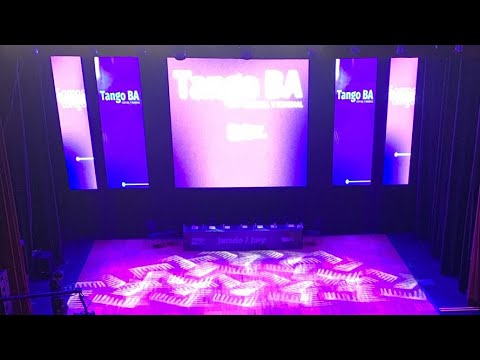
It tries to mimic social dancing and improvisational aspect of everyday milongas.
 
How many times they have to dance in each round? At least three? (Tango, Vals, Milonga). Or four?
The video from the final round, which they won, is posted on the previous page 38.


Dance Ads

Advertise on Dance Forums Reach dancers, teachers, studios, event organizers, and dance-friendly brands. View ad options
Back
Top