
opendoor
Forum Master
I don't find this helpful.First - dance to real tango music. Learn it, love it.
Second - learn the embrace.
Most leaders in Buenos Aires would not dance with someone who swings themselves around so big.

Ask questions, meet dancers, and be part of the conversation.
I don't find this helpful.First - dance to real tango music. Learn it, love it.
Second - learn the embrace.
Most leaders in Buenos Aires would not dance with someone who swings themselves around so big.
I agree. You start where you are and build from there. There may not be a wealth of traditional tango schools around, and some start from an 'alternative' context. Traditional tango music isn't always appreciated on first listening, and what's around can be elevated from the street to a less danceable concert performance. With that 'alternative' sometimes goes the embrace (although I agree that's an issue). Open, in some form, has become more common, for a variety of reasons. We're not in BsAs, and any desire to dance there with a non-tourist goes with that tradition and appreciating and enjoying that culture.I don't find this helpful.
We may developed bad habits learning tango or bring bad habits to tango from our previous life.Bad habits cost more to eliminate later once they're embrdded. I'd suggest getting other perspectives sooner, piecemeal if you like.

It's a compromise, but you don't realise that there's better unless you look around and it's explained, and sometimes you need assistance (e.g. privates) to see what's not so good and how to improve. Ingrained poor technique is more difficult to get past.I agree that those habits hinder are progress but we can accept first and deal with them later
'Bad habits' are never a good solution; better skills always allow you to deal with poor partners. Although bad habits might ensure fewer future dances.Some bad habits are useful when we dance with certain partners.
It's a social dance as described here; not escenario, ballroom, or competition, so there's a spread of abilities and acceptance but, as the OP said:AT is social dance primarily
Please don’t hold back, I’m pretty ambitious so I want ruthless feedback. I’m 41 so time is limited to get to advanced level asap.

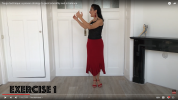
I didn't day they are solution but that they are useful.'Bad habits' are never a good solution; better skills always allow you to deal with poor partners. Although bad habits might ensure fewer future dances.

You're opposed to hugs and tango music?I don't find this helpful.
(Not at all. I probably get more kisses at the milonga than you do, and I think my collection of golden age shellacs also is bigger than yours.)..You're opposed to hugs and tango music..
Thank you! I actually worked really hard on that move, and I always feel like I do it very unelegantly and can only step into with wide legs and my partner has to practically keep me upright, so I was quite astonished to see it looking so effortless here. The dress was because the dresscode was roaring 20s, we always close off our semester with a festive practica with a fancy dress code.flandrienne, I think it looked beautiful (the dress was great, too). I especially liked the planeos; after seeing yours I said to myself, "I have to start leading those!" The overall smoothness of motion was impressive.
I think comfortable steps adapted to the partner is a more friendly goal than the perfect steps! So some bad habits need to be addressed but maybe not all or not fully removed!If you are dancing to cleanly and to perfect, and to ...
I recall watching a couple smile and giggle when there was a little hiccup in their performance - it made them seem more human, more present and part of the milonga, rather than aliens with superior technology descending from their spaceship. Lovely touch!I also like the roughness a performing couple has in the beginning when they have not yet really adapted to each other. It has happen that I lost interest when they reach the perfect performance!

I guess we could change Argentine Tango to fit our tastes and culture better. I think that has already been done. Ballroom tango, for instance? But that's a lot to give away. I, for one, am kind of tired of telling people that A. tango and B. tango are two totally different dances - including the music.. Traditional tango music isn't always appreciated on first listening, and what's around can be elevated from the street to a less danceable concert performance. With that 'alternative' sometimes goes the embrace (although I agree that's an issue). Open, in some form, has become more common, for a variety of reasons. We're not in BsAs, and any desire to dance there with a non-tourist goes with that tradition and appreciating and enjoying that culture.
That's all good, but we probably have a fundamentally different perspective. Dancing in a nice dress in front of a nice partner might look exciting to you, but it seems kind ofAt the moment I’m very happy at this school, I pay my lessons there by working the bar another night and it’s a nice atmosphere, but it’s not specifically a tango school. My plan is to see how far I get there and maybe go for a more serious tango school in a year or so.
I agree. Traditional social AT is more than a dance, bu also a culture, although it has degenerated to merely a dance in some areas, but seems to be developing more of a alternative social side in some instances. Enthusiasts may not even be qualified, let alone 'good' teachers, but just wish to pass on their findings. And I guess there's already that differentiation with 'alternative', 'nuevo', 'neo', 'jango' (arghI guess we could change Argentine Tango to fit our tastes and culture better. I think that has already been done. Ballroom tango, for instance? But that's a lot to give away. I, for one, am kind of tired of telling people that A. tango and B. tango are two totally different dances - including the music.
 ), ballroom, and any other; and of course we then get into differences in the music ranging from early-20th/late 19th century through to electro and punk tango (which seems to be re-imagining early music as well as new). Early, scratchy, recordings may be interesting to some, and become an acquired taste, but they're not going to sell AT to new starters.