Thank you for the explanation! I guess as an open dancer, my pro has always made sure that the routines are on phrase. I don't remember what we did in silver, so we could have been on phase, but it was too long ago. I just didn't remember hearing ignore it, but I understand now.This makes sense. With a pro, I would never expect to ignore musical phrasing. They are pros!
The context for me hearing this as an amateur is something like this:
[couple takes hold, then waits motionless for 20 second]
COACH: What are you doing??? Start moving already!
FIESTA: I'm waiting for the start of a phrase!
C: Well, don't. Ignore the phrasing. It's more important to get in motion quickly. Choose any 1 and get going!
[choreographing new steps with coach]
C: How about this amalgamation? [demonstrates]
F: The steps are nice, but it won't align that well with the musical phrasing.
C: Look, Fiesta, you're dancing Silver. Don't worry about phrasing. There are much more important, basic elements you will be judged on. And in any case, if you bump and reset, you'll be off-phrase anyway. Phrasing will matter once you reach Open.
In other words, I hear amateurs being told to ignore phrasing if they do not yet have the skill to observe it while dancing competitively. Pros are not so limited. I would expect good musical phrasing from a pro always, as a matter of course.

Join Dance Forums
Ask questions, meet dancers, and be part of the conversation.
You are using an out of date browser. It may not display this or other websites correctly.
You should upgrade or use an alternative browser.
You should upgrade or use an alternative browser.
Music counting and phrasing
- Thread starter fiesta0618
- Start date
If we know the song in a comp, we try to begin so that we can catch the phrasing so we can express the music better. Pro knows more songs than I do and in the beginning I didn't understand why he was "rushing" our intro or letting (to my ear) too much music go by. Now I know he knows best. Allows us to play with accents in the music because it corresponds with the choreo, if we get a good song. There are also places in our choreo where we can adjust to get on the phrasing, if he wants. It is so relaxing to leave that up to him. And if the song is really crappy and I can hardly figure out the beat, I just follow him and trust him. Eventually the beat will make itself known to me.This makes sense. With a pro, I would never expect to ignore musical phrasing. They are pros!
The context for me hearing this as an amateur is something like this:
[couple takes hold, then waits motionless for 20 second]
COACH: What are you doing??? Start moving already!
FIESTA: I'm waiting for the start of a phrase!
C: Well, don't. Ignore the phrasing. It's more important to get in motion quickly. Choose any 1 and get going!
[choreographing new steps with coach]
C: How about this amalgamation? [demonstrates]
F: The steps are nice, but it won't align that well with the musical phrasing.
C: Look, Fiesta, you're dancing Silver. Don't worry about phrasing. There are much more important, basic elements you will be judged on. And in any case, if you bump and reset, you'll be off-phrase anyway. Phrasing will matter once you reach Open.
In other words, I hear amateurs being told to ignore phrasing if they do not yet have the skill to observe it while dancing competitively. Pros are not so limited. I would expect good musical phrasing from a pro always, as a matter of course.
Last edited:

opendoor
Forum Master
I once worked with musicians for a show case. We had a big argument about phrase and bars. It was absolutely new for the musicians to speak of an 8/4 time signature in this context. The musician thinks in two 4/4 bars. The dancer designates the block in which rhythm and sequence of steps form a parallel unit as a phrase. In this case, the phrase was two bars long, so we're talking about 8/4 signature.Can you explain simply and more explicitly what the two ideas of "phrase" are? I've only ever heard of phrasing in dance as something to be avoided.
The performance with live music was tango. The principle is also followed in salsa, cha cha chá, and lindy hop when you dance to traditional music. Even with a Viennese waltz you wouldn't change the direction of rotation within the phrase of a Johann Strauss composition. That would mean someone wasn't paying enough attention during his musicality training, wouldn't it?
Last edited:

madmaximus
Forum Master
<Off topic and long...>
ON PHRASING:
Taken literally, of course a musical phrase and a dance phrase would be considered different.
Analogously, however, they are the same: they communicate an idea and importantly, both end with a punctuation.
Thus, phrasing (in both arts) is the completion of an idea.
The idea being conveyed may be an emotion, a thought, allusion (like evening church bells, for example) and so on.
Lexically, musical and dance phrasing are more comparable to a sentence (than a grammatical phrase) in that it is a complete idea and it ends with a literal punctuation. Thus, an entire choreography and musical piece would be comparable to a paragraph or series thereof. Perhaps even a short story or in the case of a symphony or opera, a novel.
In musical phrasing an idea is conveyed via sounds, pitch, rhythm, structure, etc. ; the ending punctuation (formally a cadence, if memory serves) is a sense of resolution (partially or fully) of the idea being communicated.
In ballroom dance, phrasing is a series of movements that convey an idea (usually matched to the sentiment or mood of the music); the ending punctuation may be denoted by a pause, a check, a head turn, and so on, typically matching the end of the last figure in the dance phrase. The ending punctuation resolves the idea and starts the next phrase.
I’ve always maintained that there is no right nor wrong in dance—only degrees of appropriateness depending on the competence of the dancers. Can a beginner dance a Tango to Bolero music? Perhaps not. The beginner would not have the necessary dance vocabulary to pull it off. However, a champion dancer might, can be expected to, pull it off beautifully.
Phrasing your dance to a musical phrase is a choice.
If you are in competition to display your dance prowess as an athlete, perhaps phrasing is of no use to you. Personally, I lament such indifference, now so common in higher-level competitions—where the object is to showcase the physical abilities of the dancer rather than to display a higher level of expression. The dancing is rote and mechanical, devoid of a sense of soul.
If you are dancing to display your artistry above and beyond your dance prowess, if you want to level-up beyond the physicality of the movement, to show heart via the sentiments of the music, then phrasing is a must—in order to convey aesthetic expression and emotion.
Dance requires a certain level of sensitivity to the music you are dancing to—not just the number of measures before that CODA and the timing of the steps of a figure to match. You must be aware of the mood and emotion in order to interpret the dance well and style appropriately. And therein lies the challenge: how to do it in real time.
The problem is when the intent of the dancer and the expectation of the viewer do not match.
m2cw
<sorry for the length. now back on topic?>
m
ON PHRASING:
Taken literally, of course a musical phrase and a dance phrase would be considered different.
Analogously, however, they are the same: they communicate an idea and importantly, both end with a punctuation.
Thus, phrasing (in both arts) is the completion of an idea.
The idea being conveyed may be an emotion, a thought, allusion (like evening church bells, for example) and so on.
Lexically, musical and dance phrasing are more comparable to a sentence (than a grammatical phrase) in that it is a complete idea and it ends with a literal punctuation. Thus, an entire choreography and musical piece would be comparable to a paragraph or series thereof. Perhaps even a short story or in the case of a symphony or opera, a novel.
In musical phrasing an idea is conveyed via sounds, pitch, rhythm, structure, etc. ; the ending punctuation (formally a cadence, if memory serves) is a sense of resolution (partially or fully) of the idea being communicated.
In ballroom dance, phrasing is a series of movements that convey an idea (usually matched to the sentiment or mood of the music); the ending punctuation may be denoted by a pause, a check, a head turn, and so on, typically matching the end of the last figure in the dance phrase. The ending punctuation resolves the idea and starts the next phrase.
I’ve always maintained that there is no right nor wrong in dance—only degrees of appropriateness depending on the competence of the dancers. Can a beginner dance a Tango to Bolero music? Perhaps not. The beginner would not have the necessary dance vocabulary to pull it off. However, a champion dancer might, can be expected to, pull it off beautifully.
Phrasing your dance to a musical phrase is a choice.
If you are in competition to display your dance prowess as an athlete, perhaps phrasing is of no use to you. Personally, I lament such indifference, now so common in higher-level competitions—where the object is to showcase the physical abilities of the dancer rather than to display a higher level of expression. The dancing is rote and mechanical, devoid of a sense of soul.
If you are dancing to display your artistry above and beyond your dance prowess, if you want to level-up beyond the physicality of the movement, to show heart via the sentiments of the music, then phrasing is a must—in order to convey aesthetic expression and emotion.
Dance requires a certain level of sensitivity to the music you are dancing to—not just the number of measures before that CODA and the timing of the steps of a figure to match. You must be aware of the mood and emotion in order to interpret the dance well and style appropriately. And therein lies the challenge: how to do it in real time.
The problem is when the intent of the dancer and the expectation of the viewer do not match.
m2cw
<sorry for the length. now back on topic?>
m

Warren J. Dew
Forum Master
There's more to music than just the phrases, and there's more to musicality than matching the phrases. There's also more to viennese waltz than just the turns, even in international style.Even with a Viennese waltz you wouldn't change the direction of rotation within the phrase of a Johann Strauss composition. That would mean someone wasn't paying enough attention during his musicality training, wouldn't it?
For example, within the phrases, there are strong two bar units through most of Strauss. Sometimes, those two bars are identical or close. Is that necessarily best represented by the forward and back halves of a turn in one direction? Sometimes they might be more effectively interpreted as two forward changes, or two backward changes, maintaining the same orientation of the couple rather than the same direction of turn. The styling within a figure can also be altered for musical reasons, while still dancing the same figure.
In addition, floorcraft is as important - perhaps more important, at least with respect to collision avoidance - than musicality. If one hasn't learned how to cleanly overturn one's reverse turns enough to take them around the end of the floor, it might be better to switch to naturals around the end, even if there's no phrase boundary at the switch. Surely running one's partner into the wall is worse than jarring the musicians' sensibilities.
Warren J. Dew
Forum Master
Thanks for the thread split!
I think he was of a camp that spent a lot of time on musicality, and resented that "phrasing" approach's effort to get a quick and easy 80% of the musical benefit with only 20% of the effort, perhaps considering that approach lazy.
We also took lessons from his partner, and she seemed to leave that kind of thing to him and just follow.
The really, really cynical part of me wonders if the Blackpool Finalist down-played phrasing because it was something that he struggled with. I’d love to ask his partner if she ever contributed to finding the phrase.
I think he was of a camp that spent a lot of time on musicality, and resented that "phrasing" approach's effort to get a quick and easy 80% of the musical benefit with only 20% of the effort, perhaps considering that approach lazy.
We also took lessons from his partner, and she seemed to leave that kind of thing to him and just follow.
opendoor
Forum Master
Moderator's note: this topic was split from another thread..
I find it fitting that the question about the phrase appeared in the thread about the first year in dance. Think you know the famous quote by Gian Lorenzo Bernini: you have to know the rules you want to break.
Dance Redeemer
Well-Known Member
I always thought of musical phrasing when I'm playing music as akin to a "sentence" with flow and connection between certain notes to form "words" and a clear stop at the end (which could be chord based rather than an actual pause). In this context, a musical phrase can be any number of beats. In ballroom dance, I think of it as more closely tied to the musical structure rather than the musicians' phrasing (e.g., 4 sets of 8 bars in an AABA pattern in most dance music). As others have suggested, this makes it easier to fit steps against music one may not have heard before and to adjust on the fly because you always kind of know where you are in the music and what's coming.
No, not all music maintains a fixed structure like that (La Cumparsita 10/6 count split comes to mind), but unless it is very commonly played (and choregraphed to), it's hard for most people, especially amateurs, to adjust. Obviously, if you know a song, it's much easier to modify your dynamics/steps to the actual musicians' phrasing.
When choreographing to a fixed piece of music (like a showcase), I was taught in a non-ballroom dance context that the choreographer should treat the dancers as additional instruments, which play with the orchestra, but in the same way as "real" instruments, not all play exactly the same notes at the same timing. So a dancer could dance across a musical pause, or emphasize a musically active spot. I always liked that concept.
No, not all music maintains a fixed structure like that (La Cumparsita 10/6 count split comes to mind), but unless it is very commonly played (and choregraphed to), it's hard for most people, especially amateurs, to adjust. Obviously, if you know a song, it's much easier to modify your dynamics/steps to the actual musicians' phrasing.
When choreographing to a fixed piece of music (like a showcase), I was taught in a non-ballroom dance context that the choreographer should treat the dancers as additional instruments, which play with the orchestra, but in the same way as "real" instruments, not all play exactly the same notes at the same timing. So a dancer could dance across a musical pause, or emphasize a musically active spot. I always liked that concept.
opendoor
Forum Master
Of course, but that is this is the structure within the phrase. The screenshot is from a thesis (Current inventory of the Viennese waltz in Vienna, 2009). It says that Strauss extended the traditional length of the phrase in the Viennese waltz from 8 to 16 bars...For example, within the phrases, there are strong two bar units through most of Strauss...
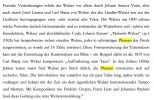

In the UCWDC, phrasing is not only not avoided, it is required. They have rules related to phrasing, fronting the judges and so on.Can you explain simply and more explicitly what the two ideas of "phrase" are? I've only ever heard of phrasing in dance as something to be avoided.

scullystwin42
Forum Master
i think this is easier for latin, and when latin music is played at comps - there is always that 16 count intro. I found it difficult in rhythm to start after the 8 or 16 count intro. i'm not great at starting at the beginning of a phrase, and it's like nails on a chalkboard to pro, as he hears that stuff intuitively.We have adjusted our choreography (open) so that it matches the phrasing of the majority of music played at comps. If we can manage to start after the intro and not have to change due to traffic then our accents will hit the 1st and 5th measures (then start counting again after 8 measures) which works nicely. Not all styles work like this but several do.

Mengu
Forum Master
The first thing we learn when learning to dance is timing. This is step 1 of musicality. Like all other aspects of dancing, musicality has many layers to learn... Phrasing is just one of those layers. You can also portray the mood of the music with your expression. You can portray micro-nuances in the music. It's all possible within choreography if you must, but of course it's possible to modify choreography based on demands of the music.
Based on your choreography, you might have a place where you "lift your arm" as part of the choreography. But that doesn't say how you are lifting your arm. If the music demands it, it can be a percussive movement, hitting a line and holding it. Or maybe it's a softer hit, and you want to throw your arm up, and suspend it at the end. Or the music might get really soft and quiet, and you lift your arm in slow sustained movement. Even when you incorporate phrase changes into your choreography, you have to keep in mind not all phrase changes are the same, and use the right quality of movement for the type of phrase change you get.
When dancing socially, we're already dancing improvisationally, so why not incorporate phrase changes and other musical nuances into the dance? What's the worst that can happen? You mess up? So what? You get back on track and keep going. It is so incredibly rewarding when you are in sync with your partner, and nail those nuances.
Based on your choreography, you might have a place where you "lift your arm" as part of the choreography. But that doesn't say how you are lifting your arm. If the music demands it, it can be a percussive movement, hitting a line and holding it. Or maybe it's a softer hit, and you want to throw your arm up, and suspend it at the end. Or the music might get really soft and quiet, and you lift your arm in slow sustained movement. Even when you incorporate phrase changes into your choreography, you have to keep in mind not all phrase changes are the same, and use the right quality of movement for the type of phrase change you get.
When dancing socially, we're already dancing improvisationally, so why not incorporate phrase changes and other musical nuances into the dance? What's the worst that can happen? You mess up? So what? You get back on track and keep going. It is so incredibly rewarding when you are in sync with your partner, and nail those nuances.

Sigh. If only. I can't tell you how many dancers I know who simply cannot hear the 1.The first thing we learn when learning to dance is timing. This is step 1 of musicality. Like all other aspects of dancing, musicality has many layers to learn...
Based on your choreography, you might have a place where you "lift your arm" as part of the choreography. But that doesn't say how you are lifting your arm. If the music demands it, it can be a percussive movement, hitting a line and holding it. Or maybe it's a softer hit, and you want to throw your arm up, and suspend it at the end. Or the music might get really soft and quiet, and you lift your arm in slow sustained movement. Even when you incorporate phrase changes into your choreography, you have to keep in mind not all phrase changes are the same, and use the right quality of movement for the type of phrase change you get.

The other night at our social, I was dancing with a somewhat inexperienced dancer, who has been taking lessons somewhere, clearly. He led a grapevine in waltz that was so perfectly synced to the phrase in the music, I was astonished, and told him, "You couldn't have done that better." It was so musical! I was so thrilled!When dancing socially, we're already dancing improvisationally, so why not incorporate phrase changes and other musical nuances into the dance? What's the worst that can happen? You mess up? So what? You get back on track and keep going. It is so incredibly rewarding when you are in sync with your partner, and nail those nuances.
madmaximus
Forum Master
Then there are those times when the DJ goes on FAIL- (or worse, Dr. Evil-) Mode, and tortures your ear with a non-starter of a song.
You know the kind: one totally devoid of any inspiring passage that it impels anyone without a QTip in either ear to slip into virulent paroxysms of monotonous rancor.
At this utterly deflating point, inspired phrasing seems doomed and justifiably relagable into the misty valley of lost causes.
When songs demand that you pray to the muse Calliope for inspiration, it is probably best to hope that you can muster the strength to "Roboto" the dance forward. Well—at least for me, anyway.
Just a rant...
m
You know the kind: one totally devoid of any inspiring passage that it impels anyone without a QTip in either ear to slip into virulent paroxysms of monotonous rancor.
At this utterly deflating point, inspired phrasing seems doomed and justifiably relagable into the misty valley of lost causes.
When songs demand that you pray to the muse Calliope for inspiration, it is probably best to hope that you can muster the strength to "Roboto" the dance forward. Well—at least for me, anyway.
Just a rant...
m
I do hereby vow, swear, and aver that, when I DJ, I will never play a song that is totally devoid of an inspiring passage or provokes virulent paroxysms of monotonous rancor*. If a song doesn't make me want to dance, it gets relegated into that misty valley!Then there are those times when the DJ goes on FAIL- (or worse, Dr. Evil-) Mode, and tortures your ear with a non-starter of a song.
You know the kind: one totally devoid of any inspiring passage that it impels anyone without a QTip in either ear to slip into virulent paroxysms of monotonous rancor.
At this utterly deflating point, inspired phrasing seems doomed and justifiably relagable into the misty valley of lost causes.
When songs demand that you pray to the muse Calliope for inspiration, it is probably best to hope that you can muster the strength to "Roboto" the dance forward. Well—at least for me, anyway.
Just a rant...
m
*new favorite phrase