Leaders. How was your Tango journey?

Thanks.

Is there a video about this projecting technique to watch and apply?

Having an understanding life partner is good. It can go the opposite way. Partner doesn't like dancing and taking lessons and get jealous at husband going dancing in the evening with different women, and may request instead to spend time with her doing something else and give up Tango.

And then, you may have a Tango girlfriend/life partner, relationship doesn't work out. Followers talk to each other, and drama gets into the Tango community, and you may get trouble getting dances.
 
As a beginner, the ladies generally would dance with me, but I could tell it was to be polite. A trick was to ask for help. They would brighten up, smile big, and seemed genuinely happy to help. The only problem was they were too helpful, I couldn't process all the good info fast enough, so I would say I can only process 2 or 3 things at a time.
 
...Is there a video about this projecting technique to watch and apply?
I haven't found one. And I don't feel like shooting one right now myself. But the article by TangoForge is quite good.
...Having an understanding life partner is good. It can go the opposite way..
As a rule, it causes problems for the life partner who stays at home, even if s/he denies it. At a certain point s/he wants the other person to stay at home, too. I have been dancing tango intensively since 2000 and I have experienced so many life partnerships that fell apart exactly at this point. Two weeks ago it even happened in my own family. My ex-wife is a dance addict and her life partner had a Parkinson's attack. She then told me, today I'm no longer allowed to dance, tomorrow I'm no longer allowed to travel, the day after tomorrow I'm no longer allowed to work independently. It's not good for one partner to put pressure on the other.
..a Tango ...relationship doesn't work out. Followers talk to each other, and drama gets into the Tango community..
The tango community only is a representative section of the world's total population. There are good people and bad characters. You have the opportunity to choose the good ones. I found all my girlfriends in my tango community, there was never any drama when the relation broke up. When you dance tango you will never be alone again. If you behave well, others will also do the same towards you. But as I said, there are always bad people. But that applies just as much to any other human environment.

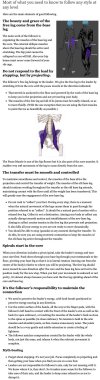
2012 Most of what you need to follow.jpg
 
Last edited:
The tango community only is a representative section of the world's total population.

Having an understanding life partner is good. It can go the opposite way.
All human life is there! We have the guy whose wife doesn't like dancing - he has to have sufficient 'points' to go out. We now have the couple where he struggled initially to dance and learn (she'd danced AT for some years and was a good follower). Then he made an effort and found the right teacher. Now there's no stopping him. Each is sometimes there on their own.

But there are 'failures':(

The argument of the general perception of AT is used - sexy dance, close contact, changing dance partners, etc, etc. Then we get to the stories surrounding choosing a dance partner. Close hold, even despite a history of dance, was initially perturbing. It's also about how you view that milonga. Just a dance? A social scene? A different space with some different set of rules? Somewhere to express yourself? Somewhere to meet your gender of interest?

But you're going to need those platonic alliances.
 
So, this is an interesting culture. Beginners struggle to get skills and acceptance. Then they become (if they don't drop out) intermediate-advanced and they treat other beginners the same way as they were treated. And the cycle goes on. I did not try to be the follower, but is this so painful to dance with beginners?
It takes time for beginners to build up their skill set; learning tango is pretty much a never ending journey, so in most places beginners don't make up a very large proportion of the tango dancing community.

How beginners are treated in a community can vary immensely. It sounds like you're in a city with a lot of tango, in some ways that is great, you'll have lots of choice when it comes to classes, events, teachers, and people to (try to) dance with. All these things mean you're likely to be able to make progress quite quickly if you try to, so you probably won't be a beginner for that long, but one of the downsides is that the community probably doesn't have to work so hard to attract and retain beginners. Some will still try, but it might not be their number one priority all the time.

In cities with smaller tango scenes, most people know that it's in their best interest to be extra friendly and welcoming to beginners because that's the only way the scene can grow to attract more dancers, more teachers, and sustain more events. For them it is a top priority, all the time. In those smaller communities, it's also easier to spot the beginners because everyone knows everyone else.

But that's not to say there aren't any friendly and kind people in those larger communities as well. There probably will be some everywhere. My advice to you is to become one of those people.

Be kind, considerate and respectful, not just of the more advanced dancers, but of everyone, even brand new beginners. Whoever you're dancing with, try to give good tango. Whoever you're talking to, be respectful, try to see the full person and not just a potential dance partner.

Most of all, focus on what you can give to the community, rather than on what you can take or receive. It's much more rewarding because it's something you can control. And the irony of it is that if you focus on giving you're likely to end up "receiving" more than you would otherwise have done.
 
It takes time for beginners to build up their skill set; learning tango is pretty much a never ending journey, so in most places beginners don't make up a very large proportion of the tango dancing community.
There's something to be said for an informal practica/'milonga' after lessons for newbies. Even to get some more advanced dancers in. It's part of creating that social environment and belonging which keeps people coming along and allows them to move safely to other milongas in the spectrum.

There are also negative impacts of that, but getting more people participating in social AT is necessary.
 
[...] in most places beginners don't make up a very large proportion of the tango dancing community [...] but one of the downsides is that the community probably doesn't have to work so hard to attract and retain beginners. Some will still try, but it might not be their number one priority all the time.
It's exactly like that. To quote myself:
Here [the] retention rate is appalling (<20%), but the registration rate is steady [as there's] an infinite, renewable pool [who] rarely stay with tango.
This creates the sense that working with beginners is, statistically, a bad investment, because most won't stick around as a result of your work. It feels a bit like being an army surgeon, saving a soldier's life so that they can go die in battle. It takes a special mindset to do it despite knowing how it'll most likely work out.

Non-beginners here know in their hearts that there will always be replacements for beginners who leave, whether those beginners move away, get too busy for tango, run out of funds for tango, find other things they like more than tango, or quit in frustration over tango – be that frustration linked to difficulty, lack of partners, perceived social snobbery, actual social snobbery, or something else. Setting this aside isn't as easy as it sounds, particularly for non-beginners who have limited time, money, or energy for tango, and so who prefer to spend those resources on tandas they can definitely appreciate rather than on a bet that some beginner will be the 1 in 5 who stays with tango and becomes a future partner.

I own up to the fact that's easily interpreted as snobbery. I do my very best not to fall into that mindset. I make a conscious point of dancing with some beginners whenever I go out to dance. That said, I confess that I do this only after I've seen the same beginner around for a few months, and asked around covertly to confirm that they've re-upped from Tango I to Tango II (or whatever their school calls it).

It doesn't help, of course, that there are so many "dancefloor teachers" who are only too happy to help. At best, they're teaching their bad habits, obstructing the line of dance with their inevitably static "lessons," and drowning out the music for those nearby with their chatter. At worst, they're actively creepy and not-subtly angling to exchange tango experience for . . . let's say, "other experiences." The former group drives many non-beginners to see dancing with beginners as a problem, while the latter group drives off beginners.
But that's not to say there aren't any friendly and kind people in those larger communities as well. There probably will be some everywhere. My advice to you is to become one of those people.

Be kind, considerate and respectful, not just of the more advanced dancers, but of everyone, even brand new beginners. Whoever you're dancing with, try to give good tango. Whoever you're talking to, be respectful, try to see the full person and not just a potential dance partner.
That's more positive than what I just wrote – thank you! All I'll add for the original poster is this:

As part of your leader journey, please avoid turning into a "dancefloor teacher" who passes along bad habits, obstructs the line of dance, chatters on the floor, and creeps on beginners. If you choose to dance with beginners (as I do – see above), you can and should adjust your dance to their level, but do not change your social conduct. Invite them to dance as you'd invite any other partner, dance quietly and with whatever steps are needed to get smooth circulation despite their level, thank them as you'd thank any other partner, and move on to the next partner.
 
Dancing with this type of follower is usually really fun if they're doing interactive moves not just random boleos
Well, it can be, if you have the space to cut loose! This suggests two caveats:

1. It might not be fun for those around you. Even without random boleos, head-tossing and exaggeration of movement take up space, while overly dramatic posing obstructs the line of dance. The movement du jour here is the painfully slow, mostly unled planeo that simultaneously takes up space with a leg sweep that'd be the envy of the Karate Kid and causes the couple to park in the line of dance for four measures.

2. If you decide to avoid those problems, it amounts to trying to contain a bag of ferrets with just your arms. This isn't usually fun.
 
Non-beginners here know in their hearts that there will always be replacements for beginners who leave
I disagree. It depends where you're located. You have a large pool of prospective beginners from a big metropolis and universities.

Maybe those young ones who started turn up again in 20-30 years. What are they going to find? They've probably moved out of the city, if they can. Out in the provinces it's a greying group. There's some new beginners in some locations. Some have rushed to lessons with the Argentinians-in-town, causing problems elsewhere. Some classes have closed. Some are struggling. Milongas, however, for those who can already dance, are ok.

Sure, it moves on. There will eventually be new milongas set up elsewhere by those erstwhile beginners to suit their tastes.
 
...Non-beginners here know in their hearts that there will always be replacements for beginners who leave..
In 2017 I would have agreed with you, but I think I'm observing a general shrinkage. When I dance somewhere else, I always ask, what's your scene like? The influx has become smaller everywhere. Even before the pandemic, I noticed that young people were more drawn to Forró, Zouk and WCS. I also stuck my nose in there. During the pandemic, salsa really experienced a huge revival. After the pandemic, it is Lindy Hop and Bachata Sensual in particular that attract young people. When I tell among people that I dance tango, there is no reaction and no questions. It's completely different when I say that I'm attending a Lindy class: everyone wants to know what it's like, what it costs, what the gender ratio is like, how long it takes to dance socially and of course how difficult it is. Unfortunately I find, tango is a dying species, at least in Europe.
 
Last edited:

Dance Ads

Advertise on Dance Forums Reach dancers, teachers, studios, event organizers, and dance-friendly brands. View ad options
Back
Top