Standard Geekery

Welllllll… but there is no accent aigu on the e in ronde. (Or accent grave, or circonflexe, or cédille, or tréma, or any other diacritical mark.)

Without the accent, "ronde" in English means "a typeface imitative of upright, somewhat angular, handwriting."


I'm pretty sure that's not the meaning people in this thread intend.
 
Last edited:
Without the accent, "ronde" in English means "a typeface imitative of upright, somewhat angular, handwriting."
And with the accent, “Rondé” in English means “an indie pop band from the Netherlands.”

I'm pretty sure that's not the meaning people in this thread intend.
Yes, I’m quite sure that’s not the meaning people in this thread intend.

I’m equally sure that’s not the meaning the NDCA intends in its Rulebook, either - and yet, the words “ronde” and “rondes” still have no diacritical marks.

Dude…just say “uncle” and be done with it. ;):rofl:
 
And with the accent, “Rondé” in English means “an indie pop band from the Netherlands.”

And where did that name come from? The accent at least says to me that the word is intended to be pronounced with two syllables rather than one.

But seriously if we're going to geek about something other than Standard, how about the Latin controversy Youtube keeps feeding me videos about, regarding whether and where there is turnout in the rumba walk? At least it's still dancing, rather than spelling.
 
I ordered the remaining 2 WDSF technique books that I didn’t yet have (Tango and Quickstep), because they were on sale at danceshopper over Labor Day. They just arrived.

I’ve taken only the most cursory look at them. In the Tango Specific Principles, I can’t help but think of @lucia_l (I don’t know how often she visits this thread). There are a couple of pages that refer to Pressure and Physics, and discuss defined sub-parts of:

Sudden Movements with Pressure in Non-Travelling Lines
Sudden Movements with Pressure in Travelling lines and figures
Sudden Movements without Pressure
And it seems in some instances a Psychological Refractory Period plays a role.

(Taking a look at the Index to see how all of this precedes the Grinding Halt.):bookworm:
 
I ordered the remaining 2 WDSF technique books that I didn’t yet have (Tango and Quickstep), because they were on sale at danceshopper over Labor Day. They just arrived.

I’ve taken only the most cursory look at them. In the Tango Specific Principles, I can’t help but think of @lucia_l (I don’t know how often she visits this thread). There are a couple of pages that refer to Pressure and Physics, and discuss defined sub-parts of:

Sudden Movements with Pressure in Non-Travelling Lines
Sudden Movements with Pressure in Travelling lines and figures
Sudden Movements without Pressure
And it seems in some instances a Psychological Refractory Period plays a role.

(Taking a look at the Index to see how all of this precedes the Grinding Halt.):bookworm:
ooo interesting, and provoking a couple of lines of thought, as in:
how can there be sudden movements in a choreographed routine?
what is a psychological refractory period?

As I may have mentioned about a thousand times, I do lead and follow* and I have learned to respond to sudden movements. If you're describing what I think you are, I can certainly relate to the Grinding Halt aspects of responding to a sudden lead. Teach and I have had many heated conversations to the effect of 'WHAT (redacted) ARE YOU DOING" after I have caused the Grinding Halt in figures when his lead requires me to change shape and direction really sharply and quickly. It took me far too long to realize that my response reflex to being startled was not particularly helpful at these times, and to learn to trust the startle.

FYI, such sudden movements are not limited to Tango. Alas.

* for lack of a better term
 
To clarify , my post #303 was intesponse to this post.
Per The Ballroom Technique, of ISTD, LOD, but "Note - The Feather Step may also be danced DW or DC". Guess preference had changed since my book was published. I dance it DC with Pro mostly.
It says that in the note. The syllabus says LOD. I envision a trick question from an examiner: "what is the alignment for the lead in the Feather Step?"

But seriously, folks. why
 
Last edited:
It says that in the note. The syllabus says LOD. I envision a trick question from an examiner: "what is the alignment for the lead in the Feather Step?"

But seriously, folks. why
Situations like this underpin some arguments I've had with other folks about syllabi. At the core of it is my question, "what is the syllabus for?"

Is it intended to be on exhaustive technical description of dance steps, such that you can learn strictly from the book? If that is the intent, I would argue that it is seriously lacking. It has inconsistencies both in content and in style that do not meet the necessary standard for a piece of technical writing.

Is it intended to be a broad sketch of the way most people do a thing, essentially like the dictionary? In that case, we can't be dogmatic and prescriptive about what it says, which is something a lot of people do.

As you can probably imagine from my writing here, I think we can't possibly treat it as an exhaustive technical reference. So when I see weird things like "feather step should be aligned LOD," I'm fairly comfortable shrugging and ignoring it. I have occasionally found straight up mistakes in syllabus books; by contrast, oddities like these are hardly worth mentioning.
 
On another subject, I was dancing in group Waltz class, as a follow, with a lead who has such powerful natural turnout, that in a back whisk, on step 2, instead of RF diag back / Backing DC against LOD, the lead's right foot was pointing DW. Lead's left foot crossed behind on 3, also with turnout, so the feet basically made a weird V. Following figure was Wing, so the back whisk was not a back whisk turning to R.

That right foot turnout made me want to go DW. To be brought across Lead's body to that awkward OP-on-the-wrong-side position for Wing, across a foot that's pointing DW? I don't know how that lead managed it.
 
Situations like this underpin some arguments I've had with other folks about syllabi. At the core of it is my question, "what is the syllabus for?"

Is it intended to be on exhaustive technical description of dance steps, such that you can learn strictly from the book? If that is the intent, I would argue that it is seriously lacking. It has inconsistencies both in content and in style that do not meet the necessary standard for a piece of technical writing.

Is it intended to be a broad sketch of the way most people do a thing, essentially like the dictionary? In that case, we can't be dogmatic and prescriptive about what it says, which is something a lot of people do.

As you can probably imagine from my writing here, I think we can't possibly treat it as an exhaustive technical reference. So when I see weird things like "feather step should be aligned LOD," I'm fairly comfortable shrugging and ignoring it. I have occasionally found straight up mistakes in syllabus books; by contrast, oddities like these are hardly worth mentioning.
Could not agree more that the syllabus is a broad sketch. The trouble comes with partners who think it is gospel. Dogmatic and prescriptive is an excellent description. Also annoying and difficult.

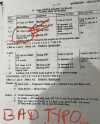
Straight up mistakes omg I have hyperventilated. Like this charming moment here:
Screen Shot 2023-09-14 at 9.27.03 AM.png

That one sent me into such a tizzy I wrote all over it and texted Teach to blame him, as if he were in charge of such things. (not, alas)
 

Dance Ads

Advertise on Dance Forums Reach dancers, teachers, studios, event organizers, and dance-friendly brands. View ad options
Back
Top