
bastet
Active Member
The cyber tango post was interesting. It won't change what songs I do or don't like, but I might view differently the next guy I see grabbing his own crotch...
hurrr hurrr hurrr....

Ask questions, meet dancers, and be part of the conversation.
The cyber tango post was interesting. It won't change what songs I do or don't like, but I might view differently the next guy I see grabbing his own crotch...
'Get Down and Get Widdit' I think has legs as a milonga/funk franchise - kewl


.. One of the reasons I expended so much time and treasure in learning Argentine Tango is that it comes from another culture. Admittedly, I was first attracted to the very cool "moves" that are part of the dance, but there are other things that don't quite fit our "Contempory Western Civilization" attitudes. The differing roles of men and women are one example that always comes to mind. Learning about other societies, and the fact that not everyone thinks or acts like us is, I think, important. It's also important, again, my opinion, to accept that other cultures are no less "right" or "wrong" in how they do things. So, if you take the music and dance out of its cultural context, you aren't giving people the "full deal"....
As a very common behavior the envy and jeaulosy came onto Di Sarli, with thepurpose of ruin his carier a violin player start to spray the gossip that DiSarli was a "yeta" or "Mufa" which means "Bad luck" and any disgrace thathappened on the Tango community Di Sarli was blamed for that. That behavior itis very common in Buenos Aires, so many very well known musicians where in thelist of "yeta" or "Mufa" I know that Antonio Agri, Jose Libertella, Charlo, andso many others where labelled in such way and the nick name was "innombrables"which means "do not say their names", Libertella was called "Libreta" whichmeans "notebook", Di Sarli "El tuerto" or "Di Churla" the purpose was not to saytheir names because if you say it will be a bad luck for you, some people blameDi Sarli and Libertella when Osmar Maderna was killed in airplane crush, beforethey blame so many of them when Carlos Gardel was killed in airplane crush inMedellin-Colombia. Personally I just can think how much ignorants and stupidthose people were, tecnhically was probed that in both cases was a realaccidents/tregedy, in Medellin the accident was a Pilots mistake and in OsmarMaderna was a mechanical problems and on top of that they created de stupid"yeta" about the Tango "Adios Muchachos".So many famous they sing and play"Adios Muchachos" and made a lot of money on top of this song, Francisco Canaroleft one of the greated fortune in Buenos Aires and he played thousand of times"Adios Muchachos".
Di Sarli was the very well paid orchestra in Buenos Aires but he made someexceptions with some musicians, one of them was the violin player that start tospray the gossip about him, he paid him just the minimun allow by the union, thevery well paid on that orchestra were Libertella and Alfredo Marcucci, they gotenough money to buy a Pizzaria at the corner of the Obelisco in BuenosAires,people in revenge of this they didn't go to eat pizza there and they haveto give up and close the business.(community of Tangueros were nice on thattime)
Because of that jeaulosy, the privilegy of to get hire for movies was given toCanaro,D'Arienzo,Troilo and others but not Di Sarli because he was a "bad luckman" and the movie makers they do not want to take a chance to be screw up byany accident on the casting.!!!
Because all of that crap Di Sarli gave up and he went to live in Rosario butlater the musicians they called him back to finished his wonderful work until hepassed away on 1960.


You get your teeth very often into tango recently. Is a new branch of business coming?... "There are no steps and you just dance to the music" and then place 100 rules and codicils...
on this one actually no defensive magic really helps!...that one started with 'Tú, el cielo y tú'...

 www.cronicasdelaemigracion.com
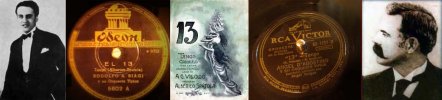

Adiós, muchachos, ya me voy y me resigno,The second tango was another foreign composition, Julio Sanders’ Adios Muchachos. - - - - - - - - I didn’t like the words either, which tell of a man’s farewell to his friends: he is going to prison because he has killed his wife’s lover. “Farewell!” Brought the song to a climax of bad taste. Murder is not my image of tango.
Por Una Cebeza, compares a horse race with his love (desire) for a lady (likely a prostitute) he lost. He concludes gambling is a solution for the moment.If your speaking about Por una Cabeza which is one of the first Gardel tango songs I ever heard, then yes - that did contribute to shaping my image of tango - and I think it's a gorgeous song just like I also like Adios Muchachos. I'd much rather have my vision of tango shaped by a beautiful song about a distasteful topic than by the odd horrible evening I had at certain milongas, or dancing with people with no appreciation or feel for the music. The MUSIC is the main reason I am drawn to tango, lyrics and all - happy or sad.
Of course there are happy lyrics in tango, but I think it's safe to say that the majority are not, for various cultural reasons, as set out in the quite intelligent discourse on the subject of tango lyrics in Masculinities: Football, Polo and the Tango in Argentina by Eduardo P. Archetti, and elsewhere.
Por Una Cebeza, By a head, you actually win or loose a horse race. I am no expert in gambling or horse races, but por una cabeza is in my modest knowledge, the first impression of what horse is the winner or not.
Carlos Zito -Hablando de Di Sarli, después de muchos años parece que se terminó la estúpida superstición de que traía mala suerte...
Horacio Ferrer - ¡Por favor, eso fue pura envidia! Después la ligó el pobre José Libertella, el gran bandoneonista creador del Sexteto Mayor. La yeta que le adjudicaban a Di Sarli se la habían trasladado a él. Es obra de envidiosos.
– Ahora, al revés, a otro gran director, Osvaldo Pugliese, se le atribuye ser un agente de la buena suerte. ¡Hasta existen estampitas del maestro con una aureola!
– Pugliese es muy querido, y se lo merece. Hay una cosa que siempre digo, y en la que fui escuchado: la trayectoria completa de la orquesta de Pugliese, con cuarenta años de evolucionar y de tocar, es mucho más importante para la música del siglo XX que lo que dejaron Los Beatles, que hicieron siempre lo mismo. Lo que pasa es que ellos tenían para su difusión la empresa Inglaterra, y nosotros la empresa Argentina. Es la verdad y nadie, pero nadie, me lo discute. El trabajo musical de la orquesta de Pugliese fue sencillamente extraordinario. Vos tomás “El rodeo” y tomás “Yunta de oro”, dos extremos, y ves que está la orquesta y está el estilo. Pero cómo evolucionó, cómo se enriqueció la orquesta: es una sinfonía maravillosa. Estaba como primer bandoneón el Tano (Osvaldo) Ruggiero, al que una vez, en París, le dije que era “el Pichuco” de la orquesta de Pugliese. ¡Quedó encantado con esa comparación! Y tuvo violinistas como Enrique Camerano y luego Oscar Herrero -Ferrer tararea el solo de violín del tango “Chiqué”, y agrega:. Camerano tenía esa cosa agitanada, que después imitó un poco Herrero-.
– Uno de los secretos del tango parece estar en su variedad de estilos.
– El tema de los estilos es el más importante en el tango, musicalmente hablando. La creación estilística en el tango es impresionante. Los estilos tienen una personalidad y una grandeza aristocrática. Fresedo, Di Sarli, D’Arienzo, Canaro, que con cuatro notas hacían su estilo inconfundible. Hay, por un lado, estilos de solistas, maneras –por ejemplo– de tocar el piano, que a veces se trasfunde a la orquesta, y por otro lado hay estilos orquestales. La orquesta de Di Sarli, a pesar de que algunos digan que no estaba escrita, sí lo estaba, aunque con muy poca cosa, con mucha sencillez, pero con una gran expresión que venía del piano del director. Toda la orquesta tocaba para el piano. Yo fui muy amigo de Félix Verdi, que era el primer bandoneón de Di Sarli, y me decía: “Siempre estaba buscando esos bordoneos, esas improvisaciones, y cuando se daba cuenta de que lo estábamos mirando, ¡tocaba en cuatro para disimular!".
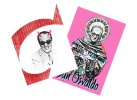

Interesting and news to me. But both were brilliant musicians.Mufa y Aureola
Just read an interview by Carlos Zito with Horacio Ferrer on José Otero's timeline. I found the comparison of Carlos di Sarli and Osvaldo Pugliese interesting. (Google can translate the text to some extent).