What Is Tango Doing Right/Wrong: Recruiting and Retaining

That's why I love technique. The more I master it, the more expressive options become available to me. I don't necessarily want to move exactly as they do, but I certainly crave having that level of sophistication and control be second nature.
I suspect you're probably not disagreeing. For my part, I can absolutely admire the skill while grumping about the floorcraft, but even if I had that skill level, I would still not want to dance in that particular style.
 
It happens so often that followers whisper to me: "It felt terrible." Even though it looked wonderful from the outside.
That was one of my biggest lessons in my earlier days. There were a number of leaders whose dance I thought looked amazing, and it was only when followers consistently said otherwise that I realised how deceptive looks can be.
 
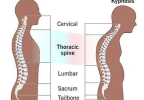
Pretty much everyone has mediocre posture. I can forgive bent necks as part of the style (and it is quite possible to make a bent neck both work well functionally and look shapely & strong) but not the weak, rounded shape in the thoracic spine that I see on most.

As long as one doesn't stick their chins out or have their heads positioned forward instead of resting on the neck, it's all good in tango. Posture, though, unfortunately, is quite a prevalent issue. I'm of the opinion that a weak body only promotes weak dancing, and while tango is a dance for all ages, neglecting one's fitness/body does have its clear, distinct consequences, as you can clearly see.

clear mindfulness of and transitions between toe, ball, and heel, or inside edges to outside edges, or using foot-pointing direction as an element of the lead. The foot is treated as one big pad

So within the confines of the accepted styles and variants thereof in that first video (you wouldn't see anything too showy there!), decorations are either subtle or not present at all. What I presume (and hope) they focus on is the embrace and the connection with each other and the music, so a lot of what they focus on is very internal (I hope). But you can also chalk it up to their advanced age and general lack of fitness.

About half of the couples have a weak or contrived open side. In my view, every touch in the couple should be functional, or else relaxed and unobtrusive if it is not. I see a number of leader-left / follower-right hands that are sticking out awkwardly and doing nothing much. On the other hand, some couples show clear and rich communication there, while others hold that hand close and low, keeping it out of the way and not dong anything silly with it. Fifty-fifty here.

You'll see this quite often in most tango dancers — the leader's right side will be unbalanced and have a pronounced lean/tilt towards the follower, while their open sides are often loose and weak or stiff and inflexible. The first issue is probably due to inadequate technique combined with a (admittedly laudable) desire to maintain the embrace, while the latter is quite a topic. One reason is that beginner leaders are told to never lead with their arms, and often that includes not pushing or pulling with their left hands. Many never grow out of that habit.

Out of curiosity, do you think this posture what makes me perceive "retirement village"? I know the slowness of the particular song is part of the reason, but I was struck by "this looks so elderly". And yet, not everyone looks old. And given figure, hair colors, body shapes, these people aren't in the aggregate that much older than I see at more "ballroomy" socials. (I think they are older than the WCS crowds.)

Age groups, generally conservative attire, lack of movement, as JIT mentions, et cetera.

Interesting tidbit about that song, El Once: it was composed for a medical students' ball, which had quite the reputation for rowdiness and trouble-making, enough that it was permanently shut down by the authorities after a prank went wrong and the rector shot one of the pranksters.

Makes you wonder at the contrast and the way they're dancing it in that video...
 
To be frank, in light of this example and some of the commentary around it, some of the objections to "showy" dancing that I have heard in this forum are increasingly sounding to me like "if not everyone is capable of x, then x has no place in social dancing." Which, for one thing, sounds incredibly stifling. And for another, would seem to lend credit to the haughty, self-righteous competitors who claim that social dancers are limited how good they can get in a way that competitors are not. Because if the attitude I have described really is how how things work, whether by intention or not, then there *is* a ceiling that social dancers can reach, after which their fellows will reject their identity as "social" and label them as something else.

I hope I'm wrong about that, and I hope folks will tell me if I am.

There are definitely tango dancers who think that (but never say it out loud, of course). In fact, you'll have plenty of people thinking oh, they're dancing style X, that's not how tango should be, rubbish!

Floorcraft in any social dance is born out of respect for other dancers. That's the fundamental guiding principle for floorcraft. By that assertion, anything goes as long as there is adequate space. I overtake, I move between lanes, I walk backwards, I move from one end of the dancefloor to the other in a matter of seconds; I do all these things when there is enough space.

That said, even if there is enough space, there is a case to be made for not doing too many large movements, because accidents can happen, and most leaders would rather dance away from them, which means said couple takes up more space than they actually are.

When the couple in front of me is too static, I intrude into their personal space. I force them to keep moving or keep dancing inches away from me. This isn't just because I want my fair share of space, it's because them dancing on the spot means I'll have to stop, which ends up creating a traffic jam behind me. I do give beginners the benefit of the doubt, perhaps a grace period of an hour at the beginning of a social event, but beyond that, they get to be thrown into the deep end of the pool and learn how to manage the floor well.

No better way to learn floorcraft!
 
As an outsider, I have nothing left to lose. The chorus of regulars in this AT forum doesn't represent the scene out there in the wild. It's not for nothing that the topic of cliquishness comes up so often here in the forum. And these cliques simply don't want to associate with average dancers. It would be tantamount to downleveling. Comments also constantly complain that professionals don't dance socially. It's clear to me that they don't enjoy it. Purism is a cloak to hide incompetence. The principle of equality among equals manifests itself in the cabeceo. Anyone who doesn't participate is immediately suspected of cliquishness or leading high boleos.

Honestly, any complaints about cliquishness stem from one thought:

He/she doesn't want to dance with me.

Would they even complain if they had no desire to dance with anyone in that clique? They'd just ignore the clique!

There is a case to be made for ruining the atmosphere of a milonga, but well, isn't a group of friends just another clique?

And it's pretty ridiculous that some dancers think they're entitled to dancing with professionals. No one is entitled to dance with anyone. Though it's funny to watch women wait all night staring at the maestros' table and not dance at all.
 
How bizarre! I place a very high value on floorcraft, but in the same circumstances I love nothing better than taking advantage of the space for a big walk.
I'm a freakin' psycho for floorcraft, to the point where it bugs some people that I won't cut them slack in a crowd if they're entering blind, backing up, changing lanes like a road rally, etc., and where I was invited to give a two-hour class on it. I'm on record as echoing one of my early, influential teachers: "If you can't dance a movement on the line of dance, in the direction of the ronda, to the music being played, then you simply can't dance it at all, whatever you might think."

But "floorcraft" and "10 metres of empty lane" don't even belong in the same room. Once you're basically dancing alone, you should be trying to use the space. Somebody had to clean it, air-condition it, and everything.
 
It definitely does attract me!

To give a different analogy, I like just right balance of salt and spice in my food. Can I eat really spicy food? Yes I can.
Not for its own sake, though. What I love about their dancing is that this even this complex, technical interplay is effortless for them. This is not strained hard work, or self-conscious showing-off. Everything in their body language says "just messing around and having fun."
Mastery means being able to do complex stuff effortlessly and make it look effortless.
As such, their palette of expressive options must be staggeringly huge. For music that asks for quieter, more conservative expression, they are certainly capable of doing that as well. It is all so easy for them, with no physical or mental barriers in the way of converting all of their emotion into movement.

While I agree that the more tools you have in the tool box, the more ways/options to express. I disagree with the choice or method of expression in that video. Therefore as I said before it is a personal preference. If I have to make a controversial take - they were dancing over the music. I prefer to dance in the music.


That's why I love technique. The more I master it, the more expressive options become available to me.
Technique is the foundation. It is a must in my books. What type of building you build on top of the foundation is where I am going.
I certainly crave having that level of sophistication and control be second nature.

Everyone does! At least those conscious about it.
 
I'll post a few videos of professionals and ask what you two think of this, @fiesta0618 , @lucia_l .


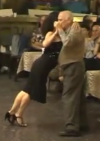
This was recorded when he was 70. I think I can safely say that plenty of people in that first social dancing video would want to dance like him or dance with him.


One of the most famous couples today. A good blend of the old and new.


Another famous couple. Very avant-garde in the tango sense.
 
grumping about the floorcraft,
I didn’t watch enough to judge that. But it is possible to have good floorcraft while dancing that way. So I don’t want to make floorcraft a red herring. I will assume they are competent enough about the floorcraft.


but even if I had that skill level, I would still not want to dance in that particular style.

And that was my primary point!
 
I'll post a few videos of professionals and ask what you two think of this, @fiesta0618 , @lucia_l .


This was recorded when he was 70. I think I can safely say that plenty of people in that first social dancing video would want to dance like him or dance with him.
Mixed impression from me. My first thought was, "I like his lower two-thirds." Good legs, good feet, good core.

But I felt conflicted about his top third. He dances with a postural slump that I assumed was age-related, until he steps back from his partner at the very end and shows that, no, at least half of that bend was conscious choice.

One result of that postural slump is that it casts his body weight forward over his feet, which limits what he can do with his arms and how he can rotate his torso, and it blocks the "energy flow" at his chest. So when I thought he looked fairly stuck on top, I assumed it was a reaction to his body-organization issue.

But then he did the funny bit with hands in pockets (which I loved), and the way he did so showed that, no, he is actually quite supple and soft through the uppers. His arms are totally unconnected from his feet, which I don't like so much, but he has trained them to work extremely well and sensitively despite that. Once again, it seems that what I would consider "needlessly constrained" is a deliberate choice.

My expectation is that his body connection feels great, but he just doesn't do very much with it, and his body organization is such that the follower has little freedom to do anything either. In addition, his arm connections are likely light and easy, but contain no information or life. All completely by intention.


One of the most famous couples today. A good blend of the old and new.
Beautiful. Unreserved appreciation.

First difference I note is that they stand up properly straight. Which means that even though they maintain a similarly-quiet top, their energy line does not break at the chest and so their uppers do not appear stressed.

The next thing I saw and appreciated was the counterpoint between his solid, thumping, bass-beat legato with her light, fluttering, melodic staccato footwork. Lovely and artistic. And I note that one factor that makes this dichotomy possible is that they have a breathing embrace. Not to the obvious extreme of the pro couple that kicked off the discussion, but clearly present.

For this couple, it is obvious to me that they move conservatively by choice, whereas in the first video it looked like an unintentional limitation.


Another famous couple. Very avant-garde in the tango sense.
This one is a bit strange. I appreciate most of the artistic decisions they make in embrace, but don't understand the ones they choose outside of it. In addition, I see many more things that I would consider basic technical flaws.

For one thing, his posture seems to come and go without warning, and he sometimes does this odd, almost Lindy-like fold at the hips that weakens his overall look significantly. You don't need to bend like that if you aren't doing kicks!

But maybe he does that bend because she is TOO upright. Her body organization looks as though she cannot possible be weight-sharing particularly well, so maybe he folds like that in order to get the connection he wants. Basically a 60/40 split in taking responsibility for the connection. That's fine-but-not-great for reliably maintaining a good feeling inside a social couple, but totally unacceptable in a performer.

And finally, their open side is dead and contrived, exactly as I didn't like in so many of the amateurs. And while they do open and close the embrace, it is a mechanical action rather than organic "breathing." I would chalk those weaknesses up to the posture oddities, mostly.

As for the art of it. When they separate, I see clear echoes of West Coast Swing and American Foxtrot in their movements. Well and good--both are versatile forms with lots of expressive options unavailable in classic AT. But rather than adopt the body shapes that work well for those styles, they hold onto the same introverted posture as in AT close embrace! It feels like Fusion gone wrong, on account of incomplete commitment to / assimilation of the borrowed movements.

**********

By my lights, the standout best dancers here are in Video #2.
 
Last edited:
What I presume (and hope) they focus on is the embrace and the connection with each other and the music, so a lot of what they focus on is very internal (I hope). But you can also chalk it up to their advanced age and general lack of fitness.
Not to be too rude.... but here, where there is no progression, little decoration, no vigor, focusing on the embrace and being "internal" reminds me of the focus of 8th graders dancing the "bear hug" at our sock hops. That said, there is more decoration than we 8th graders did.
All you would have seen at the sock hops was 13 and 14 year olds sort of hugging each other and sort of swaying side by side. The popularity of this "slow" dance continued through college. I've seen it when I'm older -- in crowds of people who, honestly, don't really know how to dance!

Age groups, generally conservative attire, lack of movement, as JIT mentions, et cetera.
I'm 65. I know the age group at ballroom dances. I'd gauge the actual age of these people from mostly 50-70. But their moves look like... 65-80 year olds at ballroom socials. And I don't mean 65 year old expert dancers who've danced all their lives developed great technique.
 
I would like to say that the input of how AT looks to outsiders that know something about dance is very important because too many people are stuck in a bubble where they don't question how or why they do things, so I appreciate the participation in the discussion of fiesta, Lucia and anyone I missed.
 
I'm 65. I know the age group at ballroom dances. I'd gauge the actual age of these people from mostly 50-70. But their moves look like... 65-80 year olds at ballroom socials. And I don't mean 65 year old expert dancers who've danced all their lives developed great technique.

Ouch. Well, that's true. At that age, it's difficult to develop good technique in general unless you've already developed it years ago or you've maintained your bodies well, which is not the case for many there I assume.

Not to be too rude.... but here, where there is no progression, little decoration, no vigor, focusing on the embrace and being "internal" reminds me of the focus of 8th graders dancing the "bear hug" at our sock hops. That said, there is more decoration than we 8th graders did.
All you would have seen at the sock hops was 13 and 14 year olds sort of hugging each other and sort of swaying side by side. The popularity of this "slow" dance continued through college. I've seen it when I'm older -- in crowds of people who, honestly, don't really know how to dance!

No rudeness detected! For them, it's what they feel, not what they look like. But I can hardly guess at what the dancers there are feeling. Dancing around Europe at both organised events and regular, local dances, I've not met many in that age group that I would consider to have an excellent embrace, one I can just sink myself into and enjoy for twelve minutes at a stretch. But maybe it's just not the kind of embrace I'm looking for.
 
One result of that postural slump is that it casts his body weight forward over his feet, which limits what he can do with his arms and how he can rotate his torso, and it blocks the "energy flow" at his chest.

I'm not quite sure about what you mean by postural slump, but tango dancers generally have their weight slightly forward, in order to better project and transmit one's intentions. You can see an instance of that at 1:30 in the second video. Generally, it's just bad posture to lean too far forward. Quite a few young/young-ish dancers take it to an extreme; they're trying to emulate his lower two-thirds, as you said — you can clearly see just how stable he is, how grounded he is. But then they end up with a pronounced anterior pelvic tilt while trying to keep their upper bodies straight, chest forward, et cetera.


If you watch from 00:10 onwards, you might be able to spot some examples of what I'm talking about. A very good friend and professional refuses to dance with those leaders, because it's just unhealthy, unsustainable posture in general and she doesn't want to put herself at risk of injury.

(Also, looking at the first video, at 1:30, you can see Tete is very upright.)

At least from my perspective, since my posture is similar to Carlitos' (or at the very least good posture in general!), I find that I have no issues with torso rotation, arm movements or any transmission of energy from my chest and solar plexus.

Beautiful. Unreserved appreciation.

Not for nothing do I rewatch their videos. :)

For one thing, his posture seems to come and go without warning, and he often does this odd, almost Lindy-like fold at the hips that weakens his overall look significantly. You don't need to bend like that if you aren't doing kicks!

But maybe he does that bend because she is TOO upright. Her body organization looks as though she cannot possible be weight-sharing particularly well, so maybe he folds like that in order to get the connection he wants. Basically a 60/40 split in taking responsibility for the connection. That's perfectly fine for reliably maintaining a good feeling inside a social couple, but not acceptable in a performer.

There's the height difference too. I've danced with her before, and you are right in saying that she is quite upright. To maintain my preferred connection, I did have to hunch (bend?) over a bit, but not in any way that would make her uncomfortable. Gianpiero is shorter than me, but the height difference is significant enough I suppose.

I'm not sure why the fold at the hips, but perhaps it's an artistic choice.

And finally, their open side is dead and contrived, exactly as I didn't like in so many of the amateurs. And while they do open and close the embrace, it is a mechanical action rather than organic "breathing." I would chalk that up to the posture oddities, mostly.

That's interesting, I've never really noticed that before. I'd agree with you in that I'd prefer to have a more organic embrace like the couple in the second video. I'm trying to think of why the third couple might prefer that, but all I can come up with is that their dance is focused on the texture and complexity of their movements, so it's not a priority to work on the aesthetic of their open side. Or maybe they need that rigidity (stability?) for their moves to work. shrugs

As for the art of it. When they separate, I see clear echoes of West Coast Swing and American Foxtrot in their movements. But rather than adopt the body shapes that work well for those styles, they hold onto the same introverted posture as in AT close embrace!

I think I wrote about this somewhere in the forums; that while there are plenty of dancers trying to integrate moves from other dances into tango — most prominently, the spin from salsa — there's still a lot of work to be done in adapting them properly. The intention isn't fusion, so changing body shapes would only be considered insofar as it doesn't change the tango body shape beyond recognition.

It's a weird topic that's only really popped up in the past decade or so. The whole separation thing, while no longer rarely seen, is new territory, unlike other social dances.
 
I'm not quite sure about what you mean by postural slump,
The extreme version of it is kyphosis.

1754435648105.png

This diagram is well beyond anything we see in the videos, but you get the idea. It is eminently possible to poise the weight forward or backward without this hunched posture, and the problems it creates are mechanical as well as aesthetic.

(Also, looking at the first video, at 1:30, you can see Tete is very upright.)
Yes, actually, this is a great example of what I mean!
1754435904327.png
Even at his MOST upright, he has a pronounced thoracic curve. Meanwhile, she has straight-to-slightly-reverse-arched posture, with a huge forward lean from the ankles! Poise and spine curve are independent.

And yet, when Tete spins out at the end, we get a brief glimpse of his "everyday" posture, and it's pretty good! Better than what he does dancing, which means the hunch is on purpose.

1754436086648.png
He and I clearly have contradictory philosophies of movement. It's not even an aesthetics thing.

There's the height difference too. I've danced with her before, and you are right in saying that she is quite upright. To maintain my preferred connection, I did have to hunch (bend?) over a bit, but not in any way that would make her uncomfortable. Gianpiero is shorter than me, but the height difference is significant enough I suppose.
I've dealt with moderate height imbalances before myself. My wife is 10" shorter than me, and my competition partner only 3" different (both measurements in heels). And what I would say is, the best place to account for height differences is in the knees. If you try to do it with any other joint, you either tilt the body or otherwise disrupt the orderly, functional stacking of body blocks. Strong posture is so critical to all movement that any compromise on it is unacceptable.

Let me reiterate, of course, that this is all Ballroom-minded. Tango may well be different. However, I would say that my experience of dance forms (and sports) suggest that there are a handful of universal commonalities in how bodies move most effectively, and spine posture does seem to be one of them. Hence my stridency.

I think I wrote about this somewhere in the forums; that while there are plenty of dancers trying to integrate moves from other dances into tango — most prominently, the spin from salsa — there's still a lot of work to be done in adapting them properly. The intention isn't fusion, so changing body shapes would only be considered insofar as it doesn't change the tango body shape beyond recognition.
One thing that I would suggest to an AT dancer looking to borrow from other styles is this nugget of wisdom from the American Smooth world, a style designed from the ground up to transition from embrace to handhold and back:

You do not stand up the same way on your own as you do in an embrace.

There's no reason to do it, and one big reason not to: on your own, you aren't weight sharing!

So when I see them maintaining an embrace-like posture when separated, it looks badly contrived to me. It is trying to over-apply an aesthetic without interrogating the original mechanical reason for it.
 
Last edited:

Dance Ads

Advertise on Dance Forums Reach dancers, teachers, studios, event organizers, and dance-friendly brands. View ad options
Back
Top