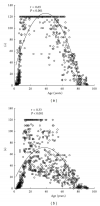
Why some women are not asked to dance

Exactly the whole point of this thread! It’s a numbers game so when the numbers are adjusted everyone gets to dance.
No, the chances still depend on one's own attractiveness and networking. Especially in large encuentros with separate rows of seats. And when expectations are high, disappointment can also be high.

I remember quite well one ecuentro where I have been sitting for an hour.
 
I suspect that's because most encuentros are role- and/or gender-balanced events. All the ones here are: To sign up, you are obligated to indicate both gender and preferred role, and the organizers make sure it's as close to 50/50 as humanly (and legally . . .) possible. Whereas at a typical milonga in our area, the ratios are heavily skewed toward loads of female followers.
The milonga, which I attend weekly, has been practically balanced since Corona. That's very pleasant.

At events with coffee and cake, live music, at Sunday afternoons or at all kind of beginner classes things are of course different.
 
Last edited:
The milonga, which I attend weekly, has been practically balanced since Corona. That's very pleasant.
That's very rare here!
At events with coffee and cake, live music, at Sunday afternoons or at all kind of beginner classes things are of course different.
I'm not even sure what that means. Milongas here don't have coffee and cake, or live music, and are mostly in the evenings – and beginners rarely show up. I guess things are just different here. (Typical milongas here start at 21h, well after classes are over and students go home, and mostly have bars with alcohol, not coffee and cake.)
 
Exactly the whole point of this thread! It’s a numbers game so when the numbers are adjusted everyone gets to dance. Also “older crowd” means you don’t have to be the best or most athletic to attract a partner.
Athleticism is not something I see at any milongas. Unlike other dances like salsa, there isn’t much athleticism required or displayed at social Tango. Neuvo has been relegated to small a niche.

Most regular milongas I attend are gender balance or slightly more men. Everyone irrespective of their skill level or age gets to dance almost equal. Youngsters will dance more with youngsters. Half of them will also dance with the older followers that are good. Older men since they do the asking will dance with everyone and I guess get to dance with half of the younger followers.

Average milonga crowd tends to be in 40s and 50s, which I consider older. Other than university town milongas, I haven’t see average age in 30s, which to me is younger. I don’t see ladies in 60s who are good dancers have any problems getting dances. Where I do see ladies in 40s and 50s losing out to younger crowd is when their skill level is below average ar the milonga. Problem is no one tells them. Equivalent category men get away lighter because when they ask they are less likely to get turned down. That doesn’t mean I haven’t heard from older men who avoid certain milongas because they don’t get enough dances. I blame them. They are friends who have been dancing for 20 years but are short on techniques and other basics that should have been fixed a long ago. They have a handful of good followers that are happy to humor them due to long standing social connections. However younger and older followers that have become good in past five years, aren’t interested in dancing with them.

While age definitely plays a role, the skill level and gender imbalance/balance dynamics play far greater roles. I have yet to witness an older Tanguera who is good, being ignored for long. Both at milongas and festivals.
 
That's very rare here!

I'm not even sure what that means. Milongas here don't have coffee and cake, or live music, and are mostly in the evenings – and beginners rarely show up. I guess things are just different here. (Typical milongas here start at 21h, well after classes are over and students go home, and mostly have bars with alcohol, not coffee and cake.)
Same at most places I have danced.
 
Athleticism is not something I see at any milongas.
My response depends on the answer to "What is athleticism?" That might be "balance," "endurance," "flexibility," "precision," "reflexes," "speed," "strength," etc., depending on what kind of athlete you have in mind. I do see balance (retaining axis), endurance (dancing all night), flexibility (dissociation), precision (in footwork), and reflexes (responding to sudden developments on the floor). I don't see very much speed or strength except on the part of people who rush too much and muscle through movements, which is mainly a leader-side flaw.
I don’t see ladies in 60s who are good dancers have any problems getting dances. Where I do see ladies in 40s and 50s losing out to younger crowd is when their skill level is below average ar the milonga. Problem is no one tells them.
Unfortunately true. Our community here is still overwhelmingly man = leader and woman = follower, so I'll be a traditionalist in this remark and later:

A lot of women who start tango here decide to stop lessons because they're getting invitations for being pretty and young, and are being "taught" on the floor. Then they age out of that zone and get dropped by people who used to invite them, in favor of incoming youngsters. By their 40s, many start complaining about it, and most quit tango by their 50s. Just about anyone dancing in their 60s continued (or resumed) lessons, and so is a competent dancer with no shortage of invitations from partners who value skill above youthful looks.
That doesn’t mean I haven’t heard from older men who avoid certain milongas because they don’t get enough dances. I blame them.
Yep. They're the guys on the inviting end in the above remark. Eventually they age past the point where anyone young wants to be their protégée or darling, and have to win tandas on the strength of their skill alone . . . which of course is absent because it atrophied due to dancing with women who quit lessons instead of with ones who kept training and became good. Your skill finds its level largely on the strength of your partners' skill.
They are friends who have been dancing for 20 years but are short on techniques and other basics that should have been fixed a long ago.
Both leaders and followers tend to assume "dancing for a long time" means "good at dancing." That's utter garbage. At best, it means "good at faking it" or "knows how to work the community." However, the acid test is whether advanced people who kept up their work choose to dance with these people without knowing who they are.
While age definitely plays a role, the skill level and gender imbalance/balance dynamics play far greater roles.
Around here that's true. Followers who sit just about always sit because either they're outnumbered and the math works against them, or they've ditched lessons and aren't very good. I've seen almost no cases where, given balanced roles at an event, a skilled dancer didn't dance.
 
My response depends on the answer to "What is athleticism?" That might be "balance," "endurance," "flexibility," "precision," "reflexes," "speed," "strength," etc., depending on what kind of athlete you have in mind. I do see balance (retaining axis), endurance (dancing all night), flexibility (dissociation), precision (in footwork), and reflexes (responding to sudden developments on the floor). I don't see very much speed or strength except on the part of people who rush too much and muscle through movements, which is mainly a leader-side flaw.
Athleticism by its very definition assumes that people younger in age have an advantage. If we take your break down of components and apply in context of social tango dancing:

Balance - As required in Tango can be obtained with proper training irrespective of age, unless someone is suffering from an ailment. Some people are naturally gifted with better balance and some not, irrespective of age. I think of all social dances Tango is probably most demanding in terms of maintaining balance.

Endurance - As required in Tango I don’t see a huge advantage depending on the age. Most people do last 3-4 hours of dancing Tango. I know people half my age or less who can’t last beyond three or hours of dancing. Not only in dancing but in other aspects of life requiring endurance. These are younger people who might be more physically active than me in their daily routines. But lack both mental and physical endurance compared to those twice their age. When it comes to dancing endurance is on of those aspects that you can’t predict based on age. Common wisdom would expect younger to have more endurance. In reality that isn’t my experience.

Flexibility - Definitly an advantage for younger. We lose flexibility with age. This is where it is more important for both dancers and their instructors to be aware of how to adapt their dancing. You can maintain quality of your dancing while adapting to your flexibility limitations. Someone with ballet or gymnastics (or Pilates/yoga) background may have more flexibility at 40 than twenty something without. Those who lack right technique and fundamental basics, will not know how to adapt.

Precision - We aren’t talking precision at the level of hand-eye coordination that top athletes require and often why mid to late thirties is when they retire. The type of precision required in social Tango is within reach through right practice, irrespective of age.

Reflexes - This is similar to flexibility. With age reflexes can diminish but not at the same rate as flexibility. In social dancing I haven’t seen reflexes giving a significant edge to anyone. Better muscle memory triumphs better reflexes in dancing.

Speed - Not pertinent to dancing Tango socially.

Strength - Doesn’t help in improving social dancing.

Overall Tango ages more gracefully than other social dances.

The most prevailing pattern I find irrespective of age, is willingness of people to practice the craft. Tango is a craft. It takes time and practice to refine it. More than other partner dance forms. But that is also the joy of it. You don’t feel you have plateaued easily.
 
Strength - Doesn’t help in improving social dancing.
? - Tango is all about core+back strength and using that for skeletal alignment/grounding and i don't think that younger people have per definiton an advantage in that. The proverbial immovable BA follower is not immovable because she is weak. I think one of the reasons that people don't enjoy constantly connected and grounded CE is that maintaining ones own bodies and the couples alignment while moving requires quite a bit of strength. And i honestly have no idea how to properly develop this type of strength within the context of AT. While it might be possible to develop it by just dancing a lot it is much more likely that by the time that that strength is there ones habits and posture are already set
 
So beauty and personal relationships don't matter either? That is quite remarkable.
They do. But it doesn’t preclude the others from getting their share of dances. There are nights where only couple of my desired partners show up at 80+ people milonga. There are other nights that perhaps 7 or 8 partners I desire to dance with are present. In either case there are tandas I will dance with unknown face (generally visitor), personal relationships, and others. There are enough nights I don’t get to dance with at least one or two of my desired partners.

Beauty alone is not sufficient in dance world. It gives you a certain advantage but if you don’t have skills, good dancers don’t make you a priority only because of good looks. Over the years both men and woman have expressed how when it comes to dancing, good dancer triumphs in their book over good looks or age.
 
? - Tango is all about core+back strength and using that for skeletal alignment/grounding and i don't think that younger people have per definiton an advantage in that. The proverbial immovable BA follower is not immovable because she is weak. I think one of the reasons that people don't enjoy constantly connected and grounded CE is that maintaining ones own bodies and the couples alignment while moving requires quite a bit of strength. And i honestly have no idea how to properly develop this type of strength within the context of AT. While it might be possible to develop it by just dancing a lot it is much more likely that by the time that that strength is there ones habits and posture are already set
I put the core strength in the balance category. I viewed strength as needed for lifts and tricks.
 
Athleticism by its very definition assumes that people younger in age have an advantage. If we take your break down of components and apply in context of social tango dancing:

Balance - As required in Tango can be obtained with proper training irrespective of age, unless someone is suffering from an ailment. Some people are naturally gifted with better balance and some not, irrespective of age. I think of all social dances Tango is probably most demanding in terms of maintaining balance.

Unfortunately there is a significant reduction in ability to balance with age.

The balancing on one foot with eyes closed has really deteriorated for me. In my 20s I did not find it difficult and could do it just about indefinitely. Now in my 40s I have to really focus hard and clench my abs like crazy to get to a minute. Otherwise I touch down in a few seconds. It's demoralizing.


Speed - Not pertinent to dancing Tango socially.
But relevant for milonga, surely
 

Attachments

  • 1663850972574.png
    1663850972574.png
    295.2 KB · Views: 4
? - Tango is all about core+back strength and using that for skeletal alignment/grounding and i don't think that younger people have per definiton an advantage in that. The proverbial immovable BA follower is not immovable because she is weak. I think one of the reasons that people don't enjoy constantly connected and grounded CE is that maintaining ones own bodies and the couples alignment while moving requires quite a bit of strength. And i honestly have no idea how to properly develop this type of strength within the context of AT. While it might be possible to develop it by just dancing a lot it is much more likely that by the time that that strength is there ones habits and posture are already set
I think there are plenty of established programs for core strength training. I've had success with Pilates but hear good things about Gyrotonic and other approaches.

I do think that just dancing by itself is not the most efficient way to develop the appropriate muscle strength. In order to do a movement cleanly, the strength has to be a bit overdetermined, so that the movement itself is easy to execute. If the underlying muscle strength is borderline, the movement may be executed but there's no way it will look clean.

I noticed when starting to dance again about a year into the pandemic that my ochos were wobbly. It's not like I was missing some specific technique, it was just that my ankles were weak from disuse. I started doing strengthening exercises for the ankle and lower leg and the wobble went away.

I did keep up solo Pilates mat work throughout the pandemic and when I started venturing back into dance I had a couple of instructors remark approvingly after dancing with me the first time that I was "strong" or "a strong dancer". I'm guessing it was the Pilates core.
 
The balancing on one foot with eyes closed has really deteriorated for me. In my 20s I did not find it difficult and could do it just about indefinitely. Now in my 40s I have to really focus hard and clench my abs like crazy to get to a minute. Otherwise I touch down in a few seconds. It's demoralizing.
Wow:eek:. I'm pushing 70 and it's still just possible. There's also getting up unaided from the floor as a measure. However the brain compensates. It's certainly readily possible focusing on something static. Pivots in various forms aren't an issue (but done those for years).

Interesting how it seems to have been the older milonguer@s that were revered, or maybe that's just who was left when interest in AT re-emerged. And, apart from maybe some hard manual work, they didn't seem to have a healthy lifestyle 'training' for AT.
 

Dance Ads

Advertise on Dance Forums Reach dancers, teachers, studios, event organizers, and dance-friendly brands. View ad options
Back
Top