ArbeeNYC
Forum Master
Unfortunate. That leads to cliques and a diminished sense of community.People mostly go there just to dance, and talk within their own groups.

Ask questions, meet dancers, and be part of the conversation.
Unfortunate. That leads to cliques and a diminished sense of community.People mostly go there just to dance, and talk within their own groups.


 tangofolly.com

This is exactly what is happening at home now. My girlfriend can no longer dance in heels. Right or not at all. She says and wants to draw a line after 35 years. No sneaker seems sexy enough. The tango princess finds it difficult to pass the crown.a woman told me this was her last night of tango, ever... danced on pain killers now.. wearing high heels for too many long.. nights, was inoperable and the only option left was quitting tango altogether..
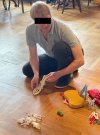
That's a strange collection of knick-knacks and assorted miscellanea for a dancer to collapse into...What might have gone wrong at this tango workshop in Hamburg, Germany, last weekend?
Poor boy, did he manage to fix it? Have you been there at La Yumba, @opendoor ?
I don't want to guess the age of his partner - just saw the picture on facebook.
View attachment 5449
They do it every year. I attended some years earlier and found that rather I am the expert!...Have you been there.

Hmm, I guess you can pause for too long after allWhat might have gone wrong at this tango workshop in Hamburg, Germany, last weekend?
Poor boy, did he manage to fix it? Have you been there at La Yumba, @opendoor ?
I don't want to guess the age of his partner - just saw the picture on facebook.
View attachment 5449

I love such moments! It also ties into something I've been working on with my coach since forever:Two hours later, had a great Biagi/Duval tanda (not the more cheerful/romantic ones, think it started with Triste Comedia and ended with Alguien) with another follower, who listened and danced to his piano. Maybe it's just where I dance or whom I dance with, but I find it uncommon that followers listen and dance well and precisely (this is the important part!), specifically to those absolutely delicious piano solos, even if I let them have the moment.
Just last weekend:There's a school of thought that the leader listens to and interprets the music, while the follower receives the music from the leader.
Ugh. On one hand, I've had perfectly enjoyable tandas with followers who didn't do anything that I didn't lead. But they still were musical. On the other, I find that it's generally much more enjoyable when a follower listens to the music, and interprets my lead according to it. The absolute best tandas I've had (tangasmic, one could say) were with active followers, who never once interfered with my lead, but placed their personality and musicality into every movement. And yet the feeling of entregarse remained ever-present. But it's a fine line between interpretation and interfering with the lead, so I can understand why not that many followers do it.In this picture, the follower either doesn't listen to the music at all (I've actually people say things like, "The follower could be dancing with earplugs.") or listens to it strictly for cues for ornaments.
I'm in full agreement with all this. Oftentimes, when I feel (from how she responds to my lead, any hesitation or even any body language that might indicate nervousness or inexperience) that my partner cannot follow precisely some complex musical phrase, I dance that phrase with my feet while leading her to the main rhythm, or the top-level melody.Tango: The leader interprets the music with leads and with leader ornaments. The leader's ornaments – which can be extravagant, up to and including uncommunicated steps – must not disrupt the follower's dance. The follower interprets the music with how they dance leads, with follower ornaments, and – when the leader opts not to lead (as in a suspension or a deliberate effort to give the follower space to play) – with fully unled movements. The follower's movements must not disrupt the leader's dance.
This I'm less sure about. I have a metronome already in my head from all the years of practising the piano, and always marking the first beat seems restrictive. But I can easily see how it might feel good, though, since the vast majority of valses place an emphasis on the first beat of most bars, and it's just natural. To give two examples (not necessarily counterexamples to your point) of valses that are more complex musically than usual:Vals: As in tango, above . . . but in addition, the follower has the job of being the metronome, and their interpretations, ornaments, and unled play must mark the 1 in 1-2-3, whatever else they do. "Must not disrupt the leader's dance" is intensified to "Should aid the leader's dance by marking the strong note."
Yes. When dancing con traspie, or double time, or the syncopation, given the overall greater tempo, there is so much precision involved that there is generally less space for the follower.Milonga: The leader interprets the music with both leads and leader ornaments. The follower primarily follows the leader, not the music. However, they still interpret the music in ornaments and deliberate spaces to play. Both dancers still must not disrupt other's dance.
This is interesting, since it has commonalities with my own personal view.There's a school of thought that the leader listens to and interprets the music, while the follower receives the music from the leader.
That sounds rather odd. I've never heard that before.There's a school of thought that the leader listens to and interprets the music, while the follower receives the music from the leader.
Well, it's more like making sure you follow the compás energetically enough to actually be able to let your partner know what your doing. Directed energy more than strength. And the energy has to be distributed throughout your body. Old-school milongueras really want to feel you move, they want to feel the energy in your arms and hands. And, reciprocally, you feel their energy as well. I love dancing with women who dance that way. So, yes, clarity is very important. If you're going to take a step, make sure she knows you're taking the step, even if it's a short one.And being that strong with my lead feels wrong. Although strength might be the wrong word; it's clarity that I should be focusing on.