Leaders. How was your Tango journey?

I think this is worth a thread on its own. Picking random videos of social dancing and commenting likes and dislikes.
Maybe. I find it interesting to see the distinction between preferences about "style" and some people who seem to mistake technical problems for "style". I do know that often people make technical mistakes because they are seeking to imitate a style without understanding-- but these two are still very different.

And of course, it's possible people make technical mistakes even when they consciously understand. Some things are hard. :)
 
I call it European insofar as I've seen this kind of dancing rise in popularity over the years in Europe, but I do agree that, given how Asia seems to be getting infected too, a better name is needed. It's a term of convenience for now.
At least we know what you are referring to now - young, energetic, space-hogging, technical, flashy style, that the marathon jet-setters wanna-be performers, who fly into those eastern Mediterranean, Eastern European, even bordering on Asian (Tsibili) marathons want to show off with.
Maybe they gravitate to those marathons because there is more space and young people there than at a *normal* European marathon (I’m not talking about encuentros).

Don’t misunderstand me, I don’t shy away from the challenge of large technical moves (space allowing), AS LONG AS the essence of tango is not diluted by focusing on the technicality of them.

You know, actually… MAYBE having a young subculture of flashy tango is not the worse thing to happen to the evolution of tango. Get the young people interested with a wow-effect, and then watch them grow into understanding that’s there’s so much more depth to it than a sports dance.
 
At least we know what you are referring to now - young, energetic, space-hogging, technical, flashy style, that the marathon jet-setters wanna-be performers, who fly into those eastern Mediterranean, Eastern European, even bordering on Asian (Tsibili) marathons want to show off with.
Maybe they gravitate to those marathons because there is more space and young people there than at a *normal* European marathon (I’m not talking about encuentros).

Don’t misunderstand me, I don’t shy away from the challenge of large technical moves (space allowing), AS LONG AS the essence of tango is not diluted by focusing on the technicality of them.

You know, actually… MAYBE having a young subculture of flashy tango is not the worse thing to happen to the evolution of tango. Get the young people interested with a wow-effect, and then watch them grow into understanding that’s there’s so much more depth to it than a sports dance.
Is it really flashy though? Or even that technical? Flashy/technical to me would be smoothly pulling off some sacada/gancho/boleo/colgada combos and making it somewhat fit to the music. I guess we all have different definitions of everything in tango.
 
Get the young people interested with a wow-effect, and then watch them grow into understanding that’s there’s so much more depth to it than a sports dance.

By the time they do that (if they even do that!), they'll be old and arthritic, while I'll be having the last laugh. :rofl:

I'm fine with flashy, technical moves — I'm not one to deny anyone's pleasure or happiness unless it directly infringes on mine. So f**k dancers who take up the space I want to move into. Tango is a travelling dance, not salsa; dancing on the spot with massive movements when there isn't enough room for me to move forwards comfortably is one way to grind my gears and sure to incite me into violating their claimed personal space. Being tall and well-built has its benefits.

Is it really flashy though? Or even that technical? Flashy/technical to me would be smoothly pulling off some sacada/gancho/boleo/colgada combos and making it somewhat fit to the music. I guess we all have different definitions of everything in tango.

You can chain multiple sacadas and do it discreetly and in a very small space, all the while advancing forwards. I've done it plenty of times in crowded floors. It's all about the intent and appearance, not about the steps themselves; movements can be done flashily or subtly, after all.
 
I find it interesting to see the distinction between.. "style" and ....to mistake technical problems for "style"....
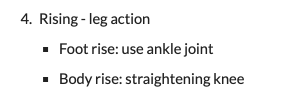
I hesitate to write something about this, because what you understand by style and technique is probably something different as to what it is in tango. I just googled "technique ballroom" and found this...
Bildschirmfoto 2025-02-25 um 15.42.27.png
In tango this would definitely fall under style. We understand style as a group of traits that are consciously imitated and passed down by a group of dancers to create distinction. The main styles can be counted on two hands, canyengue, orillero, Villa Urquiza, neotango (Naveira, early Chicho Frumboli), milonguero (Almagro, del centro, Miller), stage tango (nuevo, fantasía, Todaro), to name the most influential. Style in tango perhaps is similar to what was discussed in the thread Schools of thought in ballroom.

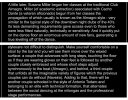
1999 Laura Falcoff wrote in the Argentine magazine Clarin (translation)...
Bildschirmfoto 2023-07-09 um 16.35.49.jpg
The article was on everyone's lips at the turn of the millennium and as a young tanguero I finally found a quotable source for what I saw every day during social dancing.
On the other hand, technique for us includes balance, body dynamics, flowing movements, projection. Technique also includes not bobbing your head when walking and always staying at the same height. Foot rise, on the other hand, is handled differently by the tango styles, so it is not part of the technique.
...do know that often people make technical mistakes because they are seeking to imitate a style without understanding..
You probably know that I often provoke the sworn milonguero stylists in this forum with my matra: Lean is an illusion. In my tango environment, the milonguero style was always the retreat of untalented dancers who did not have enough core muscles to be able to hold a bent-over posture on their own. In such cases, the definitions of style and technique unfortunately coincide. (And I hereby also apologize to the dedicated milonguero stylists who are technically capable of holding a tilted axis as well as dancing in other styles.)
 
Last edited:
You can chain multiple sacadas and do it discreetly and in a very small space, all the while advancing forwards. I've done it plenty of times in crowded floors. It's all about the intent and appearance, not about the steps themselves; movements can be done flashily or subtly, after all.
Sure, and that takes a lot of technical skill to do well in a very small space which for me is flashier than something not as technical in a big space.
 
Picking random videos of social dancing and commenting likes and dislikes.
I must say I'm a bit uncomfortable with that idea. The leader in question here didn't put himself forward for a critique, and while we might exchange views in conversation at an event, that would be a private and transient conversation, while a forum thread here is both public and permanent.

I think professionals are fair game, as the hold themselves up as examples, but not random social dancers.
 
I hesitate to write something about this, because what you understand by style and technique is probably something different as to what it is in tango.
Some things about technique are universal. Not jerking to push the womans shoulders "back" is a technical flaw in all partner dancing. The follow being a complete noodle is also a technical faw.
I just googled "technique ballroom" and found this...

Notice I am not mentioning foot rise or body rise as a universal technical flaw. Some technique is related to the style of the dance and what is valued. Other things: nope. Absolutely not.

It's all well and good to recognize that people in different areas will call some things technique and in other dances they may merely be "style". But I think I've been pretty clear listing which sorts of things I consider technical problems in all partner dances. They are not the things you found on google.

If you think something I have listed as a technical flaw is not a technical flaw, perhaps find it on the forum and explain why what I think of as a technical flaw is ok in tango. I'm obviously not going to defend claims I didn't make-- and in this case, I think I am being asked to possibly defend claims no one made. I sincerely doubt anyone in ballroom is going to decree 100% of requirements for excellent standard ballroom technique must also be "technique" when applied to AT.


On the other hand, technique for us includes balance, body dynamics, flowing movements, projection.
Balance, body dynamics, mostly flowing (not jerky) movements and what you call projection are also technique in ballroom.

Technique also includes not bobbing your head when walking and always staying at the same height.
Generally also in other partner dances-- for some basic reasons having to do with physics and anatomy.

Foot rise, on the other hand, is handled differently by the tango styles, so it is not part of the technique.
As I said: I have not discussed footrise as a universal technique thing. So no: I am not making that mistake. (I doubt anyone is.)

You probably know that I often provoke the sworn milonguero stylists in this forum with my matra: Lean is an illusion.
I don't specifically remember your mantras on lean. But I have not said much of anything about lean. I have said that one partner putting too much weight on the other is generally a problem. Great partner dancing generally requires agency on the part of both partners. I suspect this could be stated in terms of "lean"-- since way too much lean (as shown in your surely ironic cartoon avatar) would probably make it difficult for the couple to truly move on their own.


In my tango environment, the milonguero style was always the retreat of untalented dancers who did not have enough core muscles to be able to hold a bent-over posture on their own. In such cases, the definitions of style and technique unfortunately coincide. (And I hereby also apologize to the dedicated milonguero stylists who are technically capable of holding a tilted axis as well as dancing in other styles.)

I'd have to see videos of those you call untalented dancers with poor cores vs. the ones you think are talented to fully understand what you are trying to say. If you show some videos, perhaps we can all see precisely what you mean and judge whether we think that "style" and "technique" coincide.

Maybe you can poing to some videos to compare and contrast. (I think I am not the only one interested in making these discussions of technique vs. style more concrete though use of video.)

I do think it is the case that poor technique interferes will many attempts at "style".

I have no dog in the race between the milonguero style vs any other style. My guess is that if I was shown enough examples of both, I would find there are people with terrible technique in both camps. There would also be people with great technique in both camps. And I suspect even though I don't AT, I could point out some flaws that are simplu universal flaws no matter which "style" the person claims they are doing.
 
Last edited:
Maybe. I find it interesting to see the distinction between preferences about "style" and some people who seem to mistake technical problems for "style". I do know that often people make technical mistakes because they are seeking to imitate a style without understanding-- but these two are still very different.

In terms of technique AT is an unholy mess - there are at least half a dozen different and more or less compatible technical frameworks that tango is using, all frameworks steal vocabulary from the other frameworks that makes no mechanical sense in the other framework and either loosely adapt it so it more or less works or we actively compromise our technique and (usually ineptly) imitate a different framework. And if we get bored with having to work on details within one framework we just tack another one on: Lets do V embrace: if we dance clockwise we can do close embrace, if we dance counter clockwise its all open embrace. Elastic embrace is even better - we don't need to decide if we do close embrace or open embrace.

Stylistic preferences are somewhat aligned with technical preferences, but it gets really fuzzy at the edges - vocabulary is broadly shared, and there are dancers whose fundamental technique does not actually support the vocabulary and look they prefer, and it is always a bit confusing dancing with them. My tango started as pure tango nuevo, but spending a lot of time doing volcadas and single axis turns and colgadas i got more and more interested in the options that counterbalancing offers, and i was actually a bit surprised when i realized that playing in that space had turned me into a milonguero stylist - especially as i have to agree with opendoor that weak milonguero technique is can be quite uncomfortable (well, weak nuevo can be interesting too - nothing like a follower who throws themself off axis as an adornment).

So what might be a technical problem in one framework might not be one in another, or it might be incorrect in both, but in different ways.

I think not having a consistent technical framework is one of the things that make tango difficult to learn - better technique will not necessarily make vocabulary easier to execute, and finding ways to make the vocabulary work does not necessarily lead to better technique. One of the prime examples for this is that a lot of the signature vocabulary like e.g. the cross or the gancho are fiendishly difficult to do using proper technique, and this teaches tango dancers from the beginning that the look is more important.
 
I think not having a consistent technical framework is one of the things that make tango difficult to learn - better technique will not necessarily make vocabulary easier to execute, and finding ways to make the vocabulary work does not necessarily lead to better technique. One of the prime examples for this is that a lot of the signature vocabulary like e.g. the cross or the gancho are fiendishly difficult to do using proper technique, and this teaches tango dancers from the beginning that the look is more important.
I don’t know what you mean by why crosses and ganchos are difficult with proper technique, can you elaborate?
 
I do not think that can be generalize across regions - Argentina, USA, Europe, etc.

One side can claim “feeling” for dancing simple but with average skills that leave much to be desired.
In the above, does the word "feeling" relate to emotion? Or to impulses conveyed through physical connection? One hopes all partner dancers value the latter. Otherwise the two partners aren't dancing together.
 

Dance Ads

Advertise on Dance Forums Reach dancers, teachers, studios, event organizers, and dance-friendly brands. View ad options
Back
Top