Leaders. How was your Tango journey?

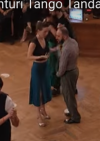
Exactly this couple. I constantly compare myself and judge quickly. They are probably the only couple that I take seriously and that I feel challenged by. I am less interested in the meditative tango of the other dancers.
I dislike the way he dances a great deal.
 
Exactly this couple. I constantly compare myself and judge quickly. They are probably the only couple that I take seriously and that I feel challenged by. I am less interested in the meditative tango of the other dancers.
Well... it's social dancing. So I don't judge really. Some follows seem uncertain where the lead might be suggesting the place their feet-- just like at the ballroom socials I go to. There are going to be a mix of levels including beginners who are still hunting around.

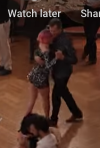
Just watching the video, I think the woman in the polka dot dress is having a nicer experience with her partner. (Both top and bottom polka dot.) That couple moves too. They manage to look graceful while moving. It doesn't have a sort of stomp-right-arm-jerk aspect of the guy in the grey pants. And their moves seem a little more integrated with the music.

But I don't do AT. maybe the guy in the grey pants feels smoother than he looks or that sort of motion brings more clarity. They do move together which is definitely a plus relative to several ladies who look like she's guessing and looking down to make sure they know where the leads feet are. I'd definitely consider them pretty ok if I were watching on the sidelines. (Way better than my AT!!)

Overall, it looks like most people are having fun dancing at a range of levels.
 
Some follows seem uncertain where the lead might be suggesting the place their feet
In tango, a lead is usually not telling the follower where to place their feet, only the direction/size/feel of the movement. As one of my teachers puts it, "follow the leader's chest and then do whatever is needed with your feet to facilitate that."
 
Just watching the video, I think the woman in the polka dot dress is having a nicer experience with her partner. (Both top and bottom polka dot.) That couple moves too. They manage to look graceful while moving. It doesn't have a sort of stomp-right-arm-jerk aspect of the guy in the grey pants. And their moves seem a little more integrated with the music.

But I don't do AT. maybe the guy in the grey pants feels smoother than he looks or that sort of motion brings more clarity. They do move together which is definitely a plus relative to several ladies who look like she's guessing and looking down to make sure they know where the leads feet are. I'd definitely consider them pretty ok if I were watching on the sidelines. (Way better than my AT!!)

It's polarising (grey pants guy's style). I can say that the way he dances is currently very much in vogue in Europe, at least in tango marathons, and all those affectations he does (left hand contortions, sticking his bum out in an attempt to maintain a lean, left upper arm at an almost 90 degree angle, opening and closing the embrace repeatedly, exaggeratedly dancing slowly, etc.) are sort of a marker of status, that he is one of the "in" crowd. I can guarantee you that plenty of followers will be looking at him to dance.

He's dancing way more to the rhythm than the melody, as you've noticed. Not my thing, but it's most dancers' choice because their musicality is quite basic, even if experienced. While the stomp-right-arm-jerk thing, as you've noticed, is technically interpreting the music just fine, he's exaggerating his movements for visual impact, and placing too much stress on the strong beats.

Maybe his follower enjoys it, but she's hanging on to him for dear life at some points, and it feels like they're not quite connected sometimes, given that she's struggling to catch up with him at those moments.

You'll notice that, in both cases (polka dot couple and grey pants couple), when they open up the embrace, they noticeably suffer a decrease in grace and smoothness; the transition is not that smooth either.

Here's a post on what European and Argentine tango are like from one of the best social dancers in Europe, who is herself a professional.

I still consider both to be tango; but when there is already such a massive distinction, visually and otherwise, I find it way more helpful to distinguish between the two.
 
In tango, a lead is usually not telling the follower where to place their feet, only the direction/size/feel of the movement. As one of my teachers puts it, "follow the leader's chest and then do whatever is needed with your feet to facilitate that."
It's the same in ballroom. The lead doesn't tell you where to put your feet.

But if, as a follow, I can't sense direction/size/feel of movement, I worry. And I start worrying about what direction to go in or how far-- and that inevitably affects where I put my feet. The feet do, after all, have to land somewhere. When I end up worrying about my feet, the problem could me me; it could be him. So when I see follows who seem to hesitate and appear to be debating where to put their feet, I figure they likely can't sense the lead (for whatever reason.)

Yes-- the lead gives direction, timing, size. But if the follow can't sense that, then, ultimately, often an observer sees the problem in her hesitant feet.

One teacher told me not to worry-- just step on his feet.:)
 
Last edited:
He's dancing way more to the rhythm than the melody, as you've noticed.
Not my thing, but it's most dancers' choice because their musicality is quite basic, even if experienced.
The "stomp" definitely doesn't convey musicality. It seems a bit like he's dancing to a military march meanwhile you've got the violin strings conveying something much more flowing. But for sure, as a follow, you are going to sense when the lead has placed his weight and likely the direction he's going to go. The danger can definitely be over leading and not giving the follow much agency.
While the stomp-right-arm-jerk thing, as you've noticed, is technically interpreting the music just fine, he's exaggerating his movements for visual impact, and placing too much stress on the strong beats.

Maybe his follower enjoys it, but she's hanging on to him for dear life at some points, and it feels like they're not quite connected sometimes, given that she's struggling to catch up with him at those moments.
One thing that struck me is she seems to have very good balance herself. (?) This is perhaps the reason she can move with confidence. I admire follows like that in all dances. They can deal with anything.
You'll notice that, in both cases (polka dot couple and grey pants couple), when they open up the embrace, they noticeably suffer a decrease in grace and smoothness; the transition is not that smooth either.
I do see that. Not being in the embrace generally does seem to have less smoothness.

The pictures of non-body contact embrace I showed above make me think a bit about "practice hold". That's sometimes used in lessons allow the follow to concentrate on some things while not having to concentrate on the full hold. Practice hold can also help prevent a lead's lack of balance from propagating to much into the follow. So I thought maybe that's why we were seeing so many couples doing that.
(In smooth, 5 proximities are all allowed-- so not being in body contact isn't necessarily a practice hold. But my impression is in AT, it's supposed to be more body contact nearly all the time?)
I still consider both to be tango; but when there is already such a massive distinction, visually and otherwise, I find it way more helpful to distinguish between the two.
The video is Tsbilisi, right? I would have expected more European style?

Anyway, it's interesting to watch. This is a marathon. Does that mean all these dancers may be tired out from a long, long session of uninterrupted dancing? Or does marathon mean something else in the context of AT?
 
The "stomp" definitely doesn't convey musicality. It seems a bit like he's dancing to a military march meanwhile you've got the violin strings conveying something much more flowing.

Yes, that's quite an accurate description; to play the devil's advocate though, if you try and perceive it as a movement that emphasises a beat, explicitly marked by the music or otherwise, it might make more sense.

One thing that struck me is she seems to have very good balance herself. (?) This is perhaps the reason she can move with confidence. I admire follows like that in all dances. They can deal with anything.

In general, I find that followers in tango tend to be more technically proficient, especially in the realm of balance. I've danced with professionals with an exquisite sense of balance and grounding, that it almost feels like you couldn't topple them over with a sledgehammer if you swung at them a thousand times. I like taking advantage of this; varying and contrasting our stability gives my follower myriad different sensations and feelings, and it makes the feeling of our dance richer and more nuanced, especially when I do it with the music. A little risk here and there, teetering on the edge of disaster, paired with superb sensitivity and knowing exactly where to toe the lines... All that adds spice and shatters monotony.

The pictures of non-body contact embrace I showed above make me think a bit about "practice hold". That's sometimes used in lessons allow the follow to concentrate on some things while not having to concentrate on the full hold. Practice hold can also help prevent a lead's lack of balance from propagating to much into the follow. So I thought maybe that's why we were seeing so many couples doing that.
(In smooth, 5 proximities are all allowed-- so not being in body contact isn't necessarily a practice hold. But my impression is in AT, it's supposed to be more body contact nearly all the time?)

I don't want to be a gatekeeper, so for me, within the spectrum of embraces, from wide open to intimately (not necessarily in the romantic sense) close, they're all tango (AT). Practice holds tend to be with the follower's left hand on her leader's upper arm, with the leader's right hand on her back, around the level of where her bra strap would be or her shoulder blade. Arms and shoulders relaxed, but still with a minimum level of tenseness that is required for communicating. If you look at this performance, you'd see a lot of usage of what you'd call a "practice hold"; of course, you almost never see this level of dance on a social dance floor, but there are plenty of experienced dancers who do employ this a lot.


The video is Tsbilisi, right? I would have expected more European style?

You are correct. :) I have had a very unconventional background when starting out tango — I essentially had teachers who taught very traditional AT:


One who taught what most people call "Salon-style tango", which is a misnomer of sorts (long story):


And another who was outright "nuevo", essentially what Chicho and Juana were doing.

But the way I dance is essentially Argentine style.

Anyway, it's interesting to watch. This is a marathon. Does that mean all these dancers may be tired out from a long, long session of uninterrupted dancing? Or does marathon mean something else in the context of AT?

A tango marathon tends to involve:
A pre-party milonga (social dance event) on Thursday (Most, but not all have this) (4, 5 hours)
An opening milonga on Friday night (5, 6 hours)
Afternoon milongas on Saturday and Sunday (5, 6 hours)
Evening milongas on Saturday and Sunday (5, 6 hours)
Maybe after-party milongas after the evening milongas (3, 4 hours, depends on the number of participants)
"Official" after-party milonga on Monday (4, 5 hours — usually a collaboration with a local milonga)

Of course, no one dances all the time, but it's still about what, approximately 10 hours a day over the whole weekend, with 8 on the side?
 
(As an addendum, since we're going into the topic of styles, it's important to note that while we can place dancers' styles under an umbrella term such as "milonguero" or "salon" or whatever, the term itself doesn't allude to the actual diversity and variety in the way dancers under the same umbrella dance.

Unfortunately, especially in the case of European style tango — which itself is kind of a misnomer, because what I and Oa (the Facebook poster) call European tango applies mostly to what a lot of people up to their 40s and 50s dance like in tango marathons and festivals here, and isn't applicable to the rest of European dancers — the ways in which people dance have been converging, and more and more people are becoming carbon copies of each other or whatever professionals they follow.

I've been lamenting this death of individuality (as a consequence of over-idolisation of pros and the general increasing vapidness of people) for ages.)
 
Hi guys, beginner leader here. Interesting to read all these comments.

I watched the video posted on the previous page of the dancers in Tbilisi I believe it was. Can somebody tell me what 'level' these dancers are at?

There has been commentary about a man in a grey pants and a woman in a blue dress? Is this a couple of about the same height, dancing quite quickly? The woman has a blue skirt and a dark top, open in the middle at the back. To my very untrained eye it looks jerky and inelegant.

In terms of embrace, I have only ever gone to one tango school. I have been doing lessons for only a few weeks (broken up by injury). The hold we all do is definitely not 'chest to chest.' The lady puts her hand on my upper arm. There is no consistent body contact other than that. Would be interested to hear then if this some kind of opem embrace, and therefore not traditional? The teacher told us she teaches a type of tango from the 1950s which emphasises elegant bodily positions. I really like it.
 
If you look at this performance, you'd see a lot of usage of what you'd call a "practice hold"; of course, you almost never see this level of dance on a social dance floor, but there are plenty of experienced dancers who do employ this a lot.
No. That's not "practice hold". I'd need pictures to show the difference. Practice hold is done specifically for practice-- possibly to focus on direction and timing when learning a new sequence.

In the video you show, the hold/proximity looks comfortable. Their hands alternating between being close to him and then to her. I'm definitely not a gatekeeper in AT! But that control over hand position is a good thing in other dances. Thanks for the various videos.

Of course, no one dances all the time, but it's still about what, approximately 10 hours a day over the whole weekend, with 8 on the side?
That's a lot of dancing!!! But yeah, there is rest between.
 
There has been commentary about a man in a grey pants and a woman in a blue dress? Is this a couple of about the same height, dancing quite quickly? The woman has a blue skirt and a dark top, open in the middle at the back. To my very untrained eye it looks jerky and inelegant.
This is the couple I think we are talking about
1740334326117.png
In terms of embrace, I have only ever gone to one tango school. I have been doing lessons for only a few weeks (broken up by injury). The hold we all do is definitely not 'chest to chest.' The lady puts her hand on my upper arm. There is no consistent body contact other than that. Would be interested to hear then if this some kind of opem embrace, and therefore not traditional? The teacher told us she teaches a type of tango from the 1950s which emphasises elegant bodily positions. I really like it.
The few AT lessons I've had often seem to be suggesting this is "the" hold. It looks like sort of an A with the tops connected but the hips apart. (I've made no progress. Try as I may the positions always seem uncomfortable and I find it difficult to feel balanced. That said, when you go to beginner group lessons you try this out with other beginners. So you get what you get.)

1740334608181.png

On your question about level-- I really have no idea. I'm just sort of gauging by what sorts of things they manage successfully, which things look pretty clunky and so on. Looks to me like the sort of spread I would see at a typical ballroom oriented social. Some people clearly manage to do a range of figures intentionally with both partners doing the same figure. So, social success! :) Others look hesitant with the follow looking like she's guessing a bit-- that's typical of people learning figures or basics. They are probably also pretty happy-- they are managing to have fun. Building skills and socializing is fun after all.

One wouldn't expect a social of any sort to be all advanced people or even mostly what we dubb gold or silver level competitors in ballroom. One hopes for the enterprise to continue you get a range of people and to me it looks like the marathon probably managed to do that. But maybe my guestimate is incorrect.

How do they look compared to people you see at socials around you?
 
I am not really sure what he is saying. Is he saying that Europeans are more technical ?
She. She's saying yes, that European dancers are more technical, more about the movements, while Argentines are more about the embrace and the music, less about the movements.
 
She. She's saying yes, that European dancers are more technical, more about the movements, while Argentines are more about the embrace and the music, less about the movements.
Out of curiosity, is there any north american style? Or other styles?
 

Dance Ads

Advertise on Dance Forums Reach dancers, teachers, studios, event organizers, and dance-friendly brands. View ad options
Back
Top